Tennis players are outside for two to three hours at a stretch, often between 10 AM and 4 PM when UV index peaks. We sweat through our shirts, wipe our faces constantly, and then complain about sunburn on the drive home. After 25 years of outdoor club tennis in Canada, I’ve used enough sunscreen to fill a hopper. Here’s what actually works on court.
Why Regular Sunscreen Fails on a Tennis Court
Standard sunscreen fails for three tennis-specific reasons: it migrates into your eyes when you sweat (burning, blurring your vision), it transfers from your hands to your grip (creating a slippery racket), and it wears off during the changeover sweat your body produces on an outdoor court. Sport sunscreen solves all three problems differently — and the tennis-specific problem of grip contamination is one that most sport sunscreen reviewers never test.
What to Look For
| Feature | Why It Matters for Tennis |
|---|---|
| SPF 50+ | UV exposure over 2–3 hr sessions adds up fast |
| Water/sweat resistant (80 min) | Standard is not enough for tennis intensity |
| Non-greasy formula | Grip transfer ruins your overgrip within one game |
| Eye-safe formula | Sweat migration into eyes during points is dangerous |
| Mineral vs chemical | Mineral (zinc) is less likely to migrate; chemical absorbs faster |
🥇 1. Neutrogena Sport Face SPF 70 — Best Overall
The most widely recommended sport sunscreen for racket sport players specifically. The oil-free formula doesn’t transfer to your grip, the SPF 70 provides real margin above the minimum, and the lightweight texture doesn’t feel heavy during warm-up. Available at every Canadian pharmacy.
🥈 2. Banana Boat Sport Ultra SPF 50 Spray — Best for Speed Application
Spray application between sets is genuinely faster than lotion, which matters when your changeover is 90 seconds. The Banana Boat Sport Ultra formula is one of the more sweat-resistant sprays available in Canada. Apply at arm’s length and avoid spraying directly onto hands before gripping.
🥉 3. Coppertone Sport Mineral SPF 50 — Best for Sensitive Skin
Zinc oxide-based sunscreen stays put better than chemical sunscreens in high-sweat conditions. The mineral formula is less likely to sting eyes as it migrates with sweat. The trade-off is a slightly heavier texture that some players find uncomfortable under a hat. Better for face and neck than for arms and legs where grip transfer is less of a concern.
The Grip Contamination Problem
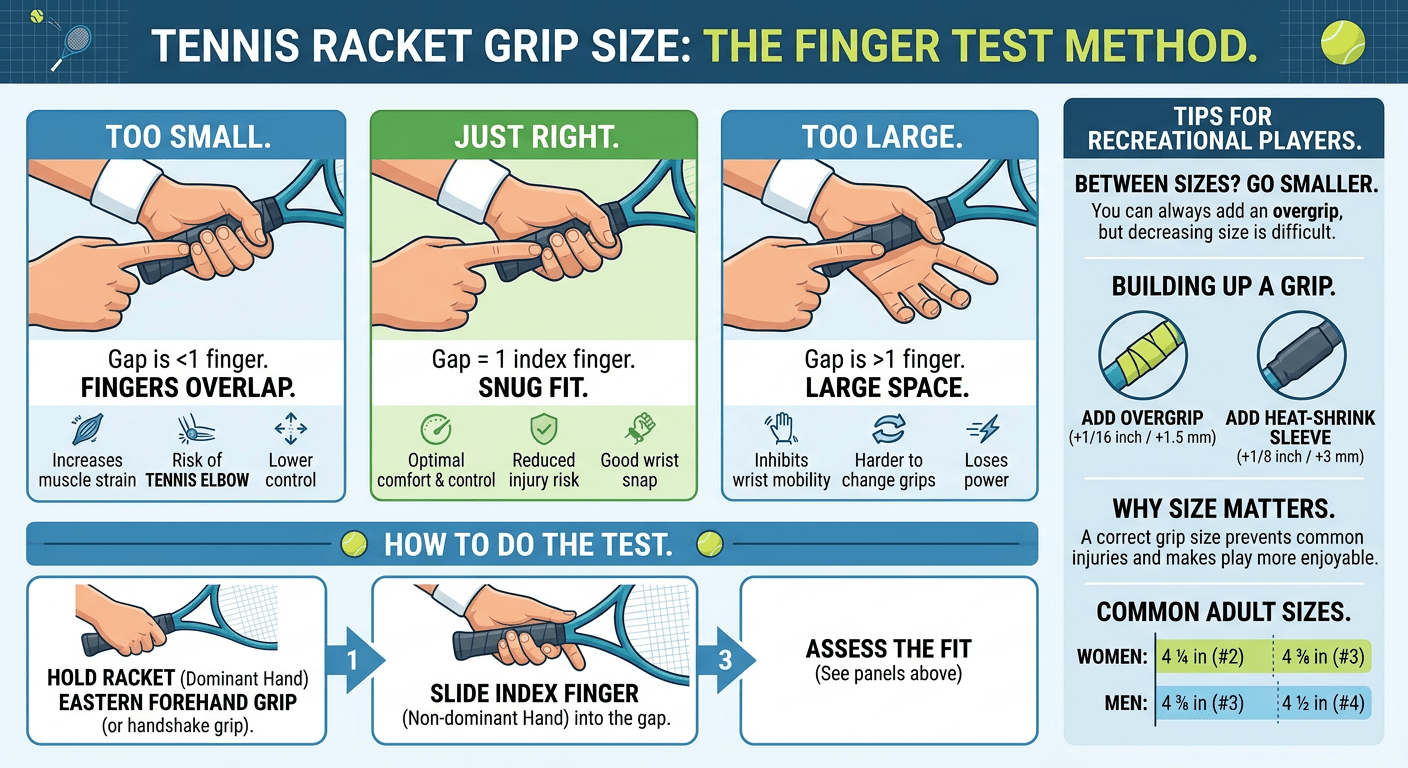
Here’s the issue nobody talks about: you apply sunscreen to your arms and hands at court-side, pick up your racket, and immediately contaminate your grip. The oils and polymers in sunscreen reduce friction between your palm and the grip tape — effectively making your racket feel like you’re holding a greased bar. The fix is simple:
- Apply sunscreen at least 15 minutes before picking up your racket
- Never apply to palms — apply to backs of hands only and let it absorb
- Reapply to arms and shoulders at changeovers, not hands
- Replace your overgrip if it feels slippery — don’t keep playing with compromised grip security
🎾 Overgrip Insurance
If you’re playing long outdoor sessions in summer, carry a spare overgrip in your bag. A sunscreen-contaminated grip is a hazard, not an inconvenience. Tourna Grip replacements are inexpensive and take 90 seconds to apply.
Sun Protection Beyond Sunscreen
Sunscreen is the floor, not the ceiling. Serious outdoor players combine it with:
Hat: A wide-brim tennis hat provides SPF equivalent to 50+ on your face and neck with zero reapplication required. The HEAD Tour Team hat and Wilson Tour tennis caps are designed to stay put during lateral movement — regular running caps shift constantly.
UV tennis shirt: Modern performance tennis shirts with UPF 50 protection are standard at club level. They’re cooler than unprotected cotton and provide reliable coverage without maintenance. Look for UPF (not SPF) on the label — it’s the clothing equivalent.
Sunglasses: UV damage to eyes is cumulative and real. Tennis-specific sunglasses with wrap-around frames and polarised lenses reduce glare on serve and reduce long-term UV exposure. Regular fashion sunglasses don’t provide adequate peripheral coverage for the head movement tennis requires.
UV Index and When It Actually Matters
The UV index in Canada peaks between 11 AM and 3 PM in summer. At UV index 3+, sunscreen is recommended for fair-skinned players. At UV index 6+ (common in Vancouver, Toronto, and Calgary July–August), SPF 50+ is appropriate for all skin tones for sessions over 60 minutes. Check the UV index in the Environment Canada app before weekend morning sessions — it’s a 10-second habit that prevents a week of peeling shoulders.
Related Reading
- Best Tennis Bags for Club Players
- Tennis Warm Up Routine
- Best Tennis Overgrips in 2026
- Why Tennis Is the Best Sport for Adults Over 30
Frequently Asked Questions
What SPF should I use for tennis?
SPF 50+ for any outdoor session over 60 minutes. The added cost of SPF 70 over SPF 50 is minimal, and the margin of protection matters on long match days. SPF 30 is the absolute minimum — below that, you’re relying on significant reapplication discipline that most players don’t maintain during a match.
Does sunscreen affect my tennis grip?
Yes, if applied incorrectly. Sunscreen on your palms transfers to your grip and reduces friction. Apply at least 15 minutes before play, avoid applying to palms, and reapply to arms at changeovers rather than hands. If your grip feels slippery mid-match, replace your overgrip rather than playing through it.
Is spray sunscreen effective for tennis?
Spray sunscreen is effective if applied correctly — spray until the skin glistens, then rub in. The convenience of reapplication at changeovers makes spray genuinely useful for tennis, but the common mistake is applying too little and relying on the spray to cover without rubbing in. Sweat-resistant spray formulas (Banana Boat Sport Ultra, Coppertone Sport) outperform regular sprays significantly.
How often should I reapply sunscreen during a match?
Every 80 minutes minimum for sweat-resistant formulas (as per Health Canada guidelines), more frequently if you’re sweating heavily or towelling off your face repeatedly. In practice: apply before play, reapply at the end of the first set, and again at the mid-point of the second if it’s a long match.
The Bottom Line
Sunscreen isn’t optional for outdoor tennis players — it’s gear, same as your overgrip or your hat. The difference is that skipping it damages you slowly rather than obviously. Use SPF 50+, apply it before play, keep it off your palms, and replace your overgrip if contamination happens. 🎾