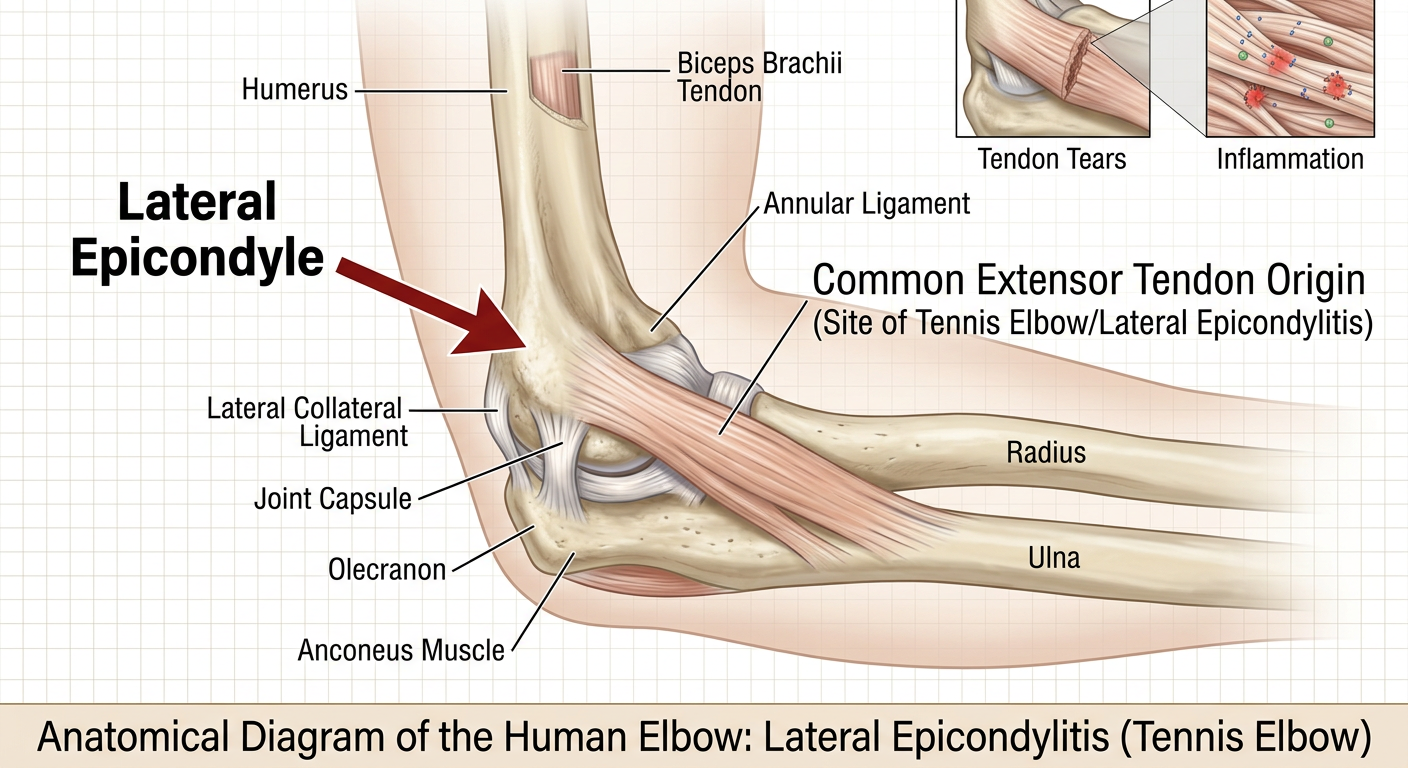
Tennis elbow — or lateral epicondylitis — is the injury that strikes recreational players who love the game but can’t afford to take two months off. After 25 years on the court, I’ve had my run-ins with it. Here’s everything I know about preventing it and recovering when it does appear, backed by the latest sports medicine research from authoritative sources.
📋 What is Tennis Elbow?
Tennis elbow is inflammation of the tendons attaching the forearm muscles to the outside of the elbow. According to the Mayo Clinic, it affects approximately 1–3% of the general population and is actually more common in non-tennis players (particularly office workers and tradespeople) — but racket sports remain a well-established trigger.
Why Recreational Players Are More at Risk Than Pros
Counterintuitive, right? Professionals train with coaches who correct technique early. Recreational players often learn tennis informally and repeat flawed mechanics for years — particularly a leading-elbow backhand or early arm extension on serves. The USTA Player Development identifies improper backhand technique as the primary cause for recreational players.
Add to this: dead strings, stiff polyester strings, heavy stiff frames, and minimal warm-up — the recreational player’s standard equipment and routine choices compound the technique problem. Pros train every day, get massaged, work with physiotherapists, and have customised equipment. We do none of that. Hence the disproportionate injury rate.
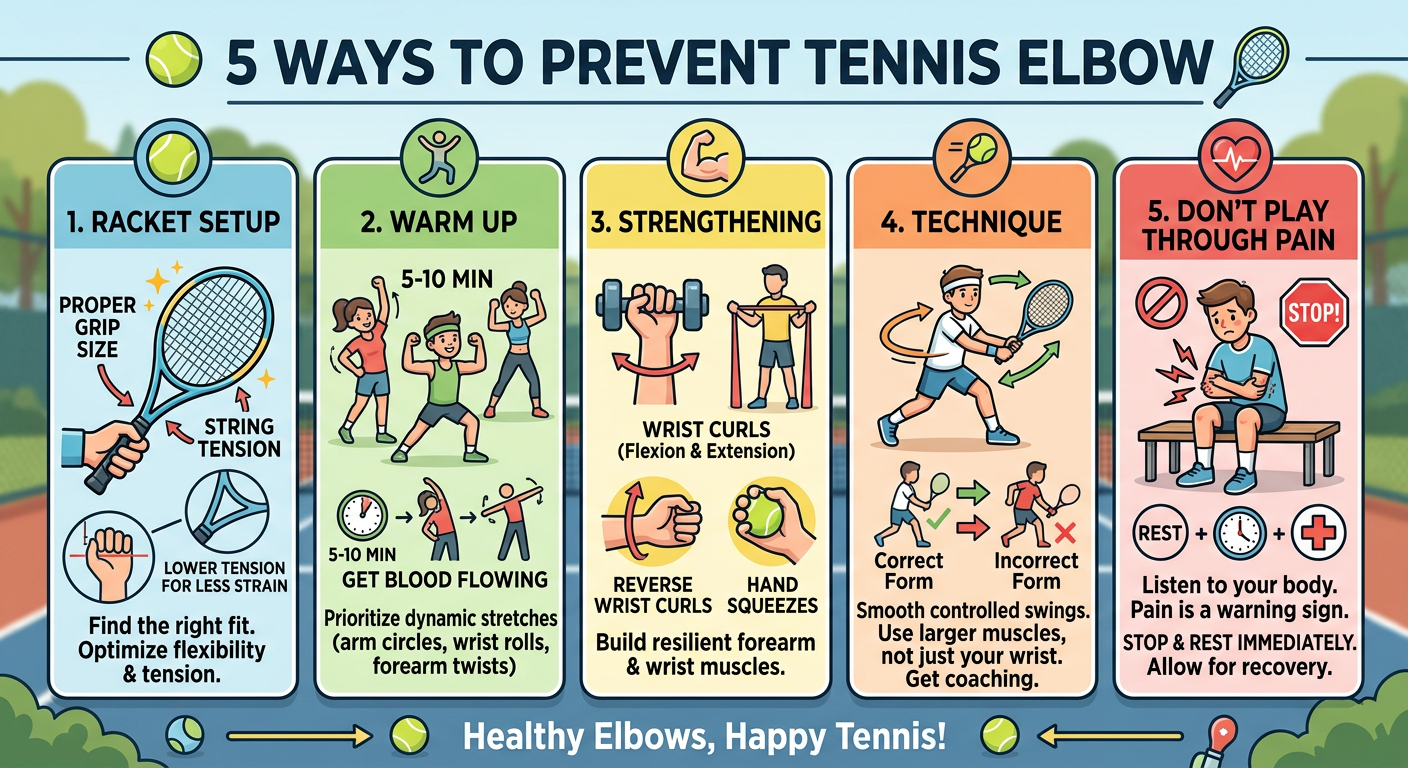
Prevention: 5 Things That Actually Work
1. Use the Right Racket and String Setup
This is the single biggest factor most players overlook. Heavy, stiff frames with tight polyester strings create significant shock on impact. If you’re prone to elbow problems:
- Choose a lighter, more flexible frame (see our racket guide for arm-friendly picks — Wilson Clash 100 v2 is the gold standard)
- Use a multifilament or natural gut string — far gentler than polyester
- String at lower tension — this reduces shock significantly (see our string tension guide)
- Replace strings regularly — dead strings transmit more shock to the arm
2. Warm Up Properly — Every Single Time
Cold tendons are vulnerable tendons. See our full tennis warm-up routine guide for a proper pre-match protocol. At minimum: arm circles, wrist rotations, and gentle forearm stretches before you hit a single ball.
3. Strengthen Your Forearm Muscles
Weak forearm muscles force your tendons to absorb load they shouldn’t. Two exercises to do every day, recommended widely in physiotherapy literature including Physiopedia’s lateral epicondylitis resources:
- Wrist curls: 3 sets of 15 with a light dumbbell (2–5 lbs)
- Eccentric wrist extensions: The gold standard exercise for tennis elbow rehabilitation. Slow lowering motion under control. 3 sets of 10–15.
- Reverse wrist curls: 3 sets of 15 with light weight
- Grip strengthening: Squeeze a stress ball or grip trainer for 30 seconds, repeat 5–10 times
4. Fix Your Backhand Technique
Leading with the elbow on a one-handed backhand is the single most common cause of tennis elbow in recreational players. If you’ve never had a coach check your backhand, book one session. It’s worth every penny — and significantly cheaper than physiotherapy. See our how to fix your tennis backhand guide for the full technique breakdown.
5. Don’t Play Through Sharp Pain
Dull ache after a long session = manageable. Sharp pain during play = stop immediately. Playing through pain converts a 6-week problem into a 6-month problem. The Mayo Clinic’s treatment guidance is unambiguous: early rest dramatically improves outcomes.
Treatment: What to Do When You Have Tennis Elbow
| Treatment | Effectiveness | Cost (CAD) | Timeline |
|---|---|---|---|
| Rest + ice | High for mild cases | Free | 1–3 weeks |
| Eccentric exercises | Very high | Free/cheap | 4–8 weeks |
| Tennis elbow strap/brace | Moderate (symptom relief) | $15–35 CAD | Immediate |
| Physiotherapy | Very high | $80–150/session | 6–12 weeks |
| Cortisone injection | High short-term | $150–300 | Days (temporary) |
| PRP injection | Moderate to high | $500–1500 | 3–6 months |
| Surgery | High for severe cases | Significant | 4–6 months recovery |
🛒 Tennis Elbow Brace — Immediate Relief During Play
A quality tennis elbow brace provides immediate relief during play by redistributing tendon load. Not a cure — but combined with the right racket setup, most recreational players can manage symptoms without stopping playing entirely.
What to look for: Adjustable strap, gel pad over the tendon attachment point, breathable material, and proper sizing for your forearm circumference.
When to See a Doctor
If pain doesn’t improve after 6 weeks of rest and exercises, or if pain is severe enough to affect daily activities (lifting a coffee cup, opening a door, using a keyboard), see a physiotherapist or sports medicine doctor. The Mayo Clinic recommends professional evaluation for cases that don’t respond to conservative treatment within this timeframe.
In Canada, you can typically self-refer to a physiotherapist (no doctor’s referral needed in most provinces). Costs are partially covered by extended health benefits or covered fully under some provincial programs for older adults.
Recovery Timeline Reality Check
- Mild cases (caught early): 2–6 weeks with rest, ice, and basic exercises
- Moderate cases: 6–12 weeks with physiotherapy and modified play
- Severe or chronic cases: 3–6+ months, may require interventions like PRP or surgery
- Played-through cases: 6–12 months — don’t be this person
🎾 For the Frustrated Tennis Elbow Sufferer
Tennis elbow is frustrating. So is having to argue with people who tell you to “just stop playing.” The “I’m not arguing — Just returning your serve” T-shirt from LooseTennisBalls is for players who refuse to give up the game they love, even when their elbow has opinions.
Related Reading
- Best Arm-Friendly Tennis Rackets (2026)
- Complete Tennis String Tension Guide
- The Complete Pre-Match Warm-Up Routine
- How to Fix Your Tennis Backhand
Frequently Asked Questions
How long does tennis elbow take to heal?
Mild cases caught early heal in 2–6 weeks with rest and basic exercises. Moderate cases requiring physiotherapy take 6–12 weeks. Severe or chronic cases can take 3–6 months or longer. The most important factor is catching it early — playing through sharp pain dramatically extends recovery time.
Can I keep playing tennis with tennis elbow?
Mild cases — yes, with modifications: arm-friendly racket, lower string tension, multifilament strings, brace during play, and proper warm-up. Moderate to severe cases — no. Continuing to play through significant pain converts a 6-week problem into a 6-month problem. Trust the pain signals.
What’s the best racket for tennis elbow?
The Wilson Clash 100 v2 is widely recognised as the best arm-friendly performance frame currently available. Wilson’s carbon mapping technology allows the frame to flex on contact rather than transmitting shock to the arm. Pair with multifilament strings (HEAD Velocity MLT or Wilson NXT) at lower tension for maximum comfort.
Do tennis elbow braces actually work?
Yes — for symptom relief during activity. A quality brace redistributes load away from the inflamed tendon attachment point, allowing you to play with less pain. They are not a cure — they manage symptoms. Combine with rest, exercises, and proper equipment for best results.
Should I get a cortisone shot for tennis elbow?
Cortisone provides effective short-term relief but has been shown in long-term studies to potentially worsen outcomes versus conservative treatment. Most sports medicine professionals now recommend it only for severe cases that interfere with daily life and haven’t responded to physiotherapy. Discuss with a sports medicine doctor before pursuing.
Why do I have tennis elbow if I don’t play tennis?
Tennis elbow is actually more common in non-tennis players than tennis players. Office workers (mouse and keyboard use), tradespeople (repetitive gripping and twisting), painters, plumbers, and gardeners are all common sufferers. Any repetitive forearm motion can trigger it. The name is misleading — the condition is just over-represented in racket sports populations.
The Bottom Line
Don’t wait until you can’t hold a coffee cup before taking tennis elbow seriously. A bit of prevention saves months of frustrating recovery. Take care of your arm and it’ll take care of your game for decades. 🎾