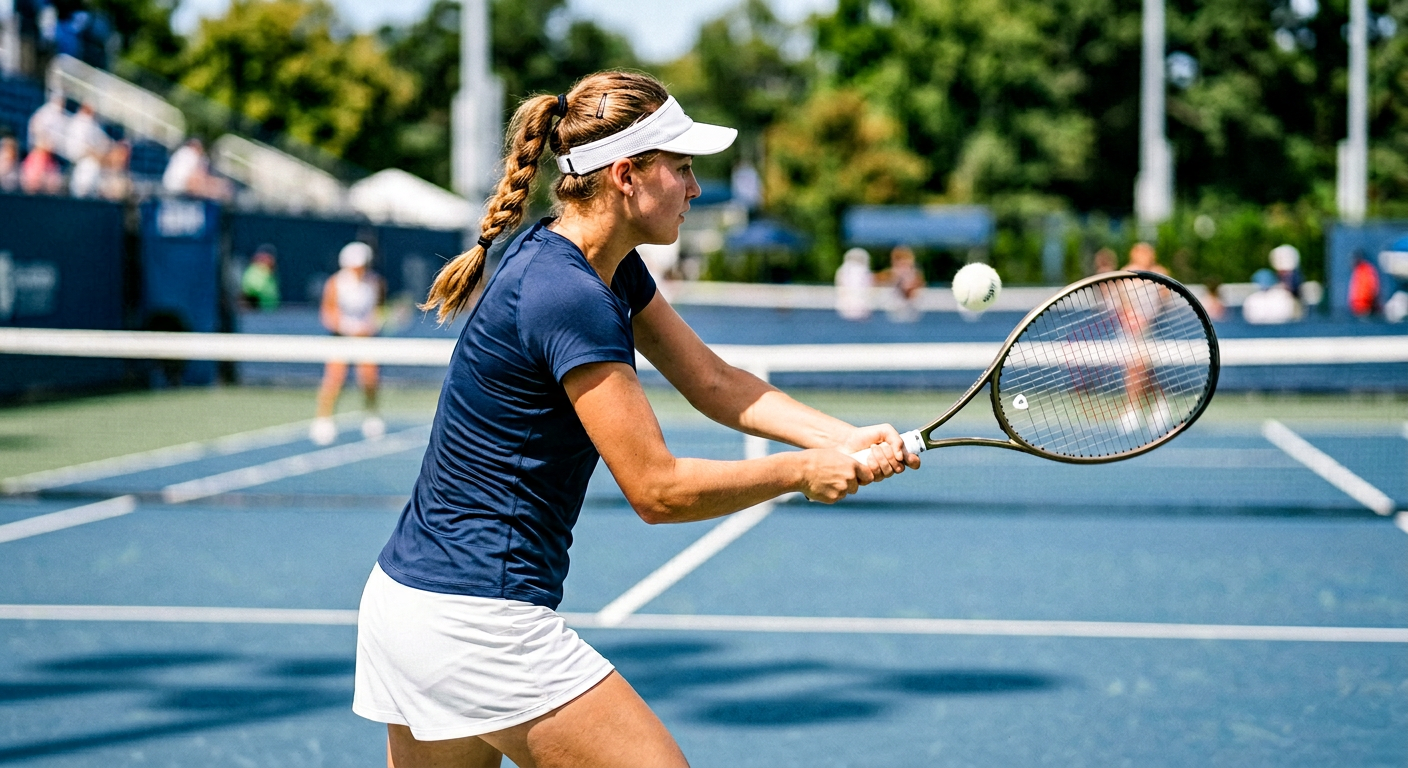
The backhand is where recreational tennis careers go to suffer. Most players hit it fine in warmup and then inexplicably forget how to use it the moment a real point starts. After 25 years of fixing my own backhand and watching hundreds of club players struggle with theirs, here’s the complete guide to identifying and fixing the most common recreational backhand problems in 2026.
First: One-Handed or Two-Handed?
| Style | Pros | Cons | Best For |
|---|---|---|---|
| Two-Handed | More power, easier to learn, better for high balls | Limited reach, harder to develop feel | Most recreational beginners |
| One-Handed | Greater reach, more slice options, elegant feel | Harder to master, vulnerable to high balls | Players willing to invest time |
If you’re still developing, the USTA generally recommends the two-handed backhand as the easier foundation. Both are valid at recreational level — the best backhand is the one you practise consistently. Notable two-handers on tour: Carlos Alcaraz, Iga Swiatek, Coco Gauff. Notable one-handers: Stefanos Tsitsipas, Lorenzo Musetti, Stan Wawrinka.
The 5 Most Common Recreational Backhand Problems
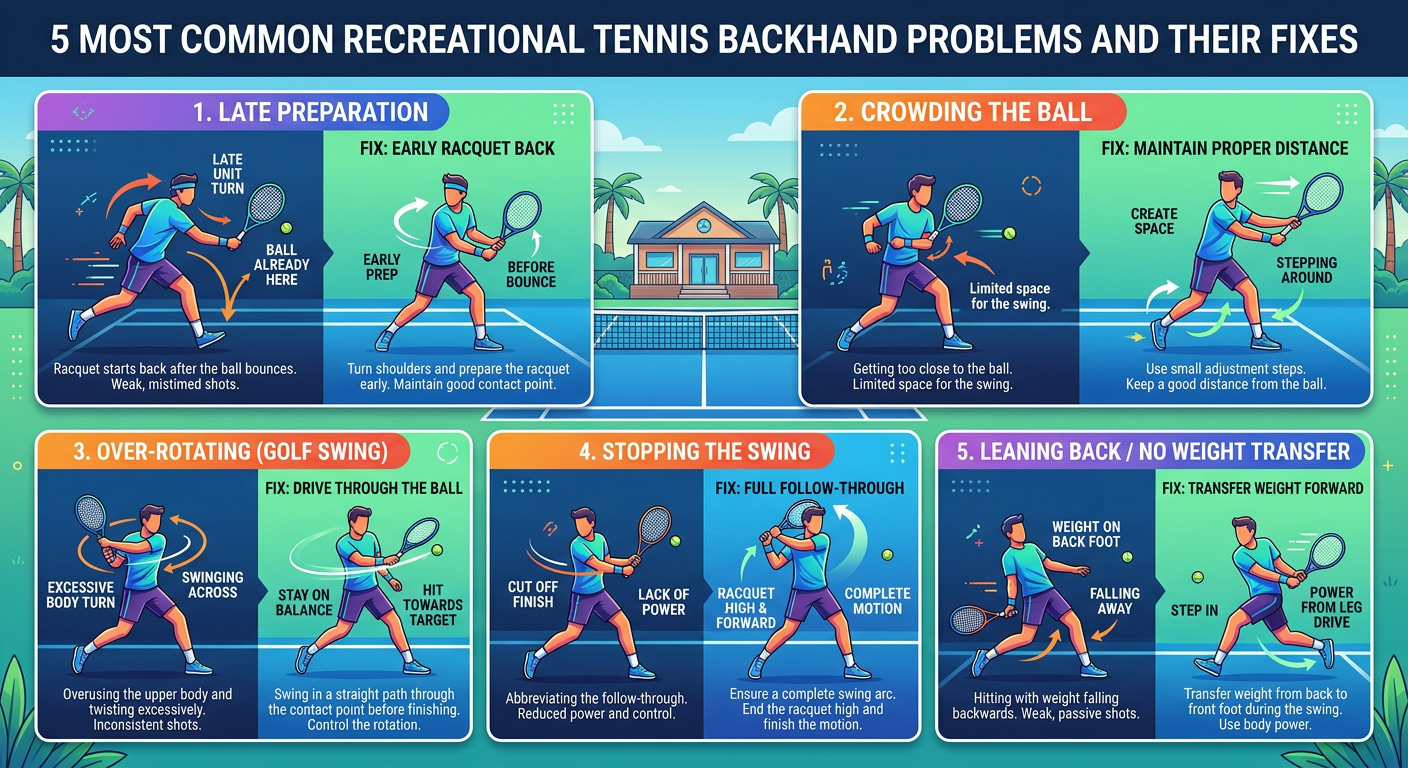
1. The Ball Goes in the Net (Most Common)
Cause: Too much downward swing angle, contact too late behind the body.
Fix: Contact the ball out in front of your body — think “shaking hands with the net” at the moment you’d hit the ball. Practice shadow swings focusing on where imaginary contact happens.
2. No Power at All
Cause: Arm-only swing with no body rotation.
Fix: The power comes from hip and shoulder rotation, not arm strength. Practice turning your shoulders fully on the backswing — front shoulder pointing toward the back fence before you swing forward.
3. Inconsistency Under Pressure
Cause: Muscle memory breaks down when nervous. You revert to whatever pattern was ingrained earliest — usually a defensive poke at the ball.
Fix: Drill the backhand in low-pressure situations until the correct movement is your default. 100 repetitions in practice equals maybe 10–15 secure backhands under pressure.
4. Arm Pain After Playing
Cause: Leading with the elbow on a one-handed backhand. Classic cause of tennis elbow.
Fix: Read our full tennis elbow guide — technique correction plus the right racket and string setup makes a significant difference.
5. The Slice That Goes Nowhere
Cause: Cutting under the ball at the wrong angle, not following through.
Fix: Think of the slice as a “high-to-low” swing with the racket face open (tilted upward). Follow through should end with the racket pointing toward your target, not dropping toward the ground.
A Simple 20-Minute Backhand Practice Routine
Minutes 1–5: Shadow swings only. No ball. Focus entirely on contact point — practise stopping your swing at the moment you would make contact, checking your arm position each time. Use a mirror or your phone in selfie mode for visual feedback.
Minutes 6–10: Drop-feed yourself. Stand at the service line, drop the ball, and hit controlled backhands into the court. Focus only on contact point in front of your body. No power. Just consistent contact placement.
Minutes 11–16: Partner or wall rally. Sustained backhand-only rallies, aiming cross-court. Count consecutive backhands without error — try to beat your record each session.
Minutes 17–20: Simulate pressure. Partner feeds random balls to your backhand from the net. You must move to the ball before hitting — no stationary feeding. This replicates match conditions where you rarely get to set up perfectly.
When to Get Help
If you’ve been playing for more than a year and your backhand is still causing you real problems, book a single lesson with a coach to diagnose the specific issue. One session of video analysis is worth six months of self-diagnosis. Most clubs in Canada offer hourly coaching at $60–$100 CAD per session.
Tennis Canada maintains a coach finder through the Tennis Canada website that locates certified coaches in your area. Worth using.
🎾 Stop Arguing With Your Backhand
Your backhand isn’t your enemy — it’s just misunderstood. The “I’m not arguing — Just returning your serve” T-shirt from LooseTennisBalls captures the spirit of every recreational player who refuses to give up on the shot that betrays them.
Related Reading
- → How to Improve Your Tennis Serve in 30 Days
- → Tennis Elbow Prevention and Treatment
- → Complete Pre-Match Warm-Up Routine
- → Best Tennis Rackets for Recreational Players (2026)
Frequently Asked Questions
Should I switch from one-handed to two-handed backhand?
If you’re a recreational player struggling consistently with your one-handed backhand, switching to two-handed is worth considering — particularly if you have any history of tennis elbow. The two-handed backhand is easier to learn, more forgiving on technique errors, and significantly more arm-friendly. Most successful late-career conversions happen within 3–6 months of dedicated practice.
Why is my backhand worse than my forehand?
For most right-handed recreational players, the backhand uses the non-dominant side of the body for the primary swing motion — making it less natural and requiring more practice to develop. Most recreational players also instinctively practise their forehand more because it feels better, creating a self-reinforcing skill gap. The fix is dedicated backhand-only practice sessions.
How can I improve my backhand quickly?
Daily shadow swings (no ball) focusing on contact point in front of the body are the fastest improvement available. 50 reps per day for 14 days will significantly improve your contact point consistency. Add wall rallies (backhand only) for an additional power and control improvement.
What’s the best racket for a weak backhand?
A larger head size racket (105+ sq in) is more forgiving on off-centre backhand contact, which is the primary issue for most recreational players with weak backhands. The HEAD Ti.S6 at 115 sq in is the most forgiving recreational frame available. See our racket guide for full recommendations.
Why does my backhand hurt my arm?
Most commonly: leading with your elbow on a one-handed backhand, which puts excessive stress on the lateral elbow tendon. Other causes include stiff polyester strings at high tension and dead strings transmitting excessive shock. Read our tennis elbow guide for the complete breakdown.
How long does it take to fix a tennis backhand?
Minor adjustments (contact point, follow-through) can show results in 2–4 weeks of dedicated practice. Major technique overhauls (grip changes, switching from one-handed to two-handed) take 3–6 months. The key variable is practice frequency — daily shadow swings dramatically accelerate the timeline versus practising only during play.
The Bottom Line
Your backhand is fixable. It just needs attention — daily shadow swings, dedicated practice sessions, and possibly one coaching lesson to identify the specific technical issue. Most recreational players never invest the focused time on their backhand that they invest in their forehand, then wonder why one shot is dramatically better than the other.
Even your warm-up routine should include backhand-specific stretching before you start hitting. See our complete warm-up guide. Now go practise. 🎾