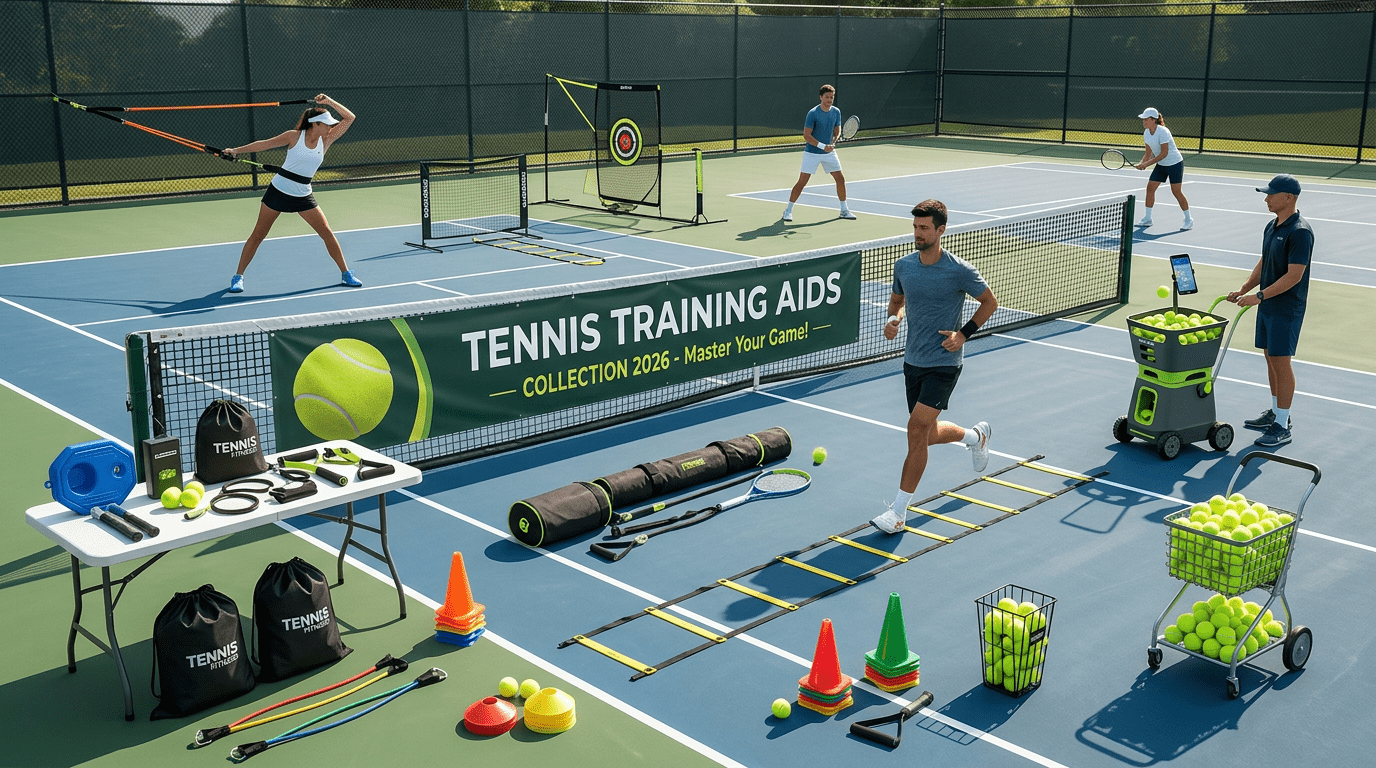
Recreational players who want to improve faster than match play alone allows need two things: a deliberate practice plan and the right training tools to execute it. The market for tennis-specific training aids has grown significantly — and a lot of it is genuinely useful. Here’s what’s worth buying in 2026 and what isn’t.
The Training Aid Trap — Buy These, Not Those
First, a word of caution. The tennis training aid market has a lot of gimmicks — gadgets that promise to fix your serve in a week or add 20mph overnight. They don’t work. The tools that work are the simple, functional ones: resistance bands, agility equipment, and practice aids that create useful constraints for repetitive drilling. Spend money on those. Skip the rest.
🥇 1. Resistance Bands (Tennis-Specific Set) — Best for Injury Prevention
Resistance bands are the single highest-value training tool available for tennis players and the most consistently overlooked. They’re used for rotator cuff strengthening (shoulder injury prevention), forearm strengthening (tennis elbow prevention — see our full elbow guide), hip and glute activation, and serve speed development. A quality set of 5 bands in varying resistance levels covers every exercise you’ll use.
View Resistance Band Sets on Amazon.ca →
🥈 2. Agility Ladder — Best for Footwork
Tennis is a footwork sport. The difference between a recreational player and a good recreational player is usually footwork, not stroke production. An agility ladder (20-rung, foldable) lets you do the same footwork drills used by ATP and WTA professionals in warmups and conditioning sessions. Takes 10 minutes per session. Creates measurable improvement in split-step timing and court coverage within 4–6 weeks of consistent use.
View Agility Ladders on Amazon.ca →
🥉 3. Tennis Rebounder/Return Board — Best for Solo Groundstroke Practice
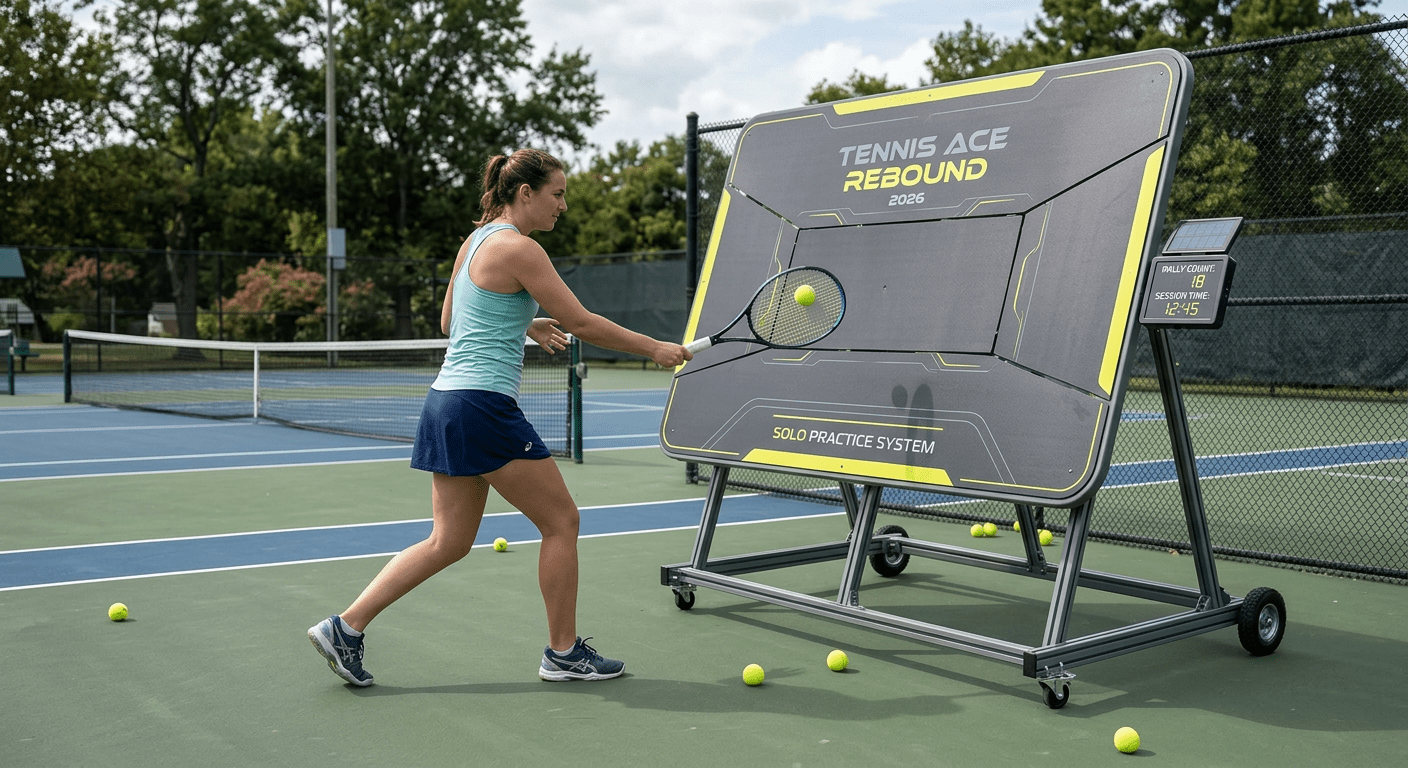
A rebounder (or tennis rebound board) lets you practise groundstrokes alone with consistent ball return. Place it against a wall, fence, or as a freestanding unit and you can generate hundreds of repetitions of a specific stroke in 30 minutes. Far more effective than hitting against a wall because the bounce angle is predictable and adjustable. Good rebounders are rated for both groundstrokes and volleys.
View Tennis Rebounders on Amazon.ca →
4. Tennis Wrist Trainer / Swingweight Sleeve — Best for Serve Development
Weighted wrist sleeves or swing trainers add resistance to your serve and groundstroke motion, building the specific muscles used for wrist snap and forearm pronation. 10–15 minutes of shadow swings with a weighted sleeve creates faster wrist snap in your actual strokes through progressive overload. Used by coaches for developing serve speed in juniors — equally effective for adult recreational players.
View Tennis Swing Trainers on Amazon.ca →
5. Speed Cones and Targets — Best Value
A set of disc cones costs $15 and improves three distinct areas of your game: court movement drills (place them as sprint targets), serve target practice (place one in the service box and aim at it), and approach shot precision (mark a zone and aim approach shots to it). The most inexpensive training tool with the most uses. Every serious recreational player should have a set in their bag.
View Training Cones on Amazon.ca →
| Training Aid | Primary Benefit | Price (CAD) | Best For |
|---|---|---|---|
| Resistance Bands | Injury prevention, strength | $20–$40 | Every player ✅ |
| Agility Ladder | Footwork, split-step timing | $20–$35 | Players wanting faster feet |
| Tennis Rebounder | Solo groundstroke repetitions | $60–$150 | Players without regular partners |
| Swing Trainer | Serve speed, wrist snap | $25–$50 | Serve improvement focus |
| Disc Cones | Target practice, movement drills | $15–$25 | Best value — everyone |
What to Skip
Products that consistently disappoint recreational players: complicated ball-throwing devices that require precise setup, weighted training rackets for beginners (risk of technique breakdown), and “serve speed apps” that use phone microphones. The first three items in this list — resistance bands, agility ladder, cones — cost under $80 combined and deliver more training value than any gadget at 5× the price.
🎾 Train Hard. Play Well.
Got the bands, the ladder, the cones. The “Just Shut Up and Serve” tee from LooseTennisBalls is the reward for putting the work in.
Related Reading
- Best Tennis Ball Hoppers 2026
- Why Recreational Players Plateau
- How to Improve Your Tennis Serve
- Tennis Elbow Prevention — resistance bands are the most effective exercise
Frequently Asked Questions
What training equipment do tennis players use?
Professional players use resistance bands for rotator cuff and shoulder conditioning, agility ladders for footwork drills, and sprint cones for court movement conditioning. At the recreational level, these same tools are accessible and affordable on Amazon.ca for $15–$40 each — and they produce measurable improvement within 4–6 weeks of consistent use.
How can I practice tennis alone without a partner?
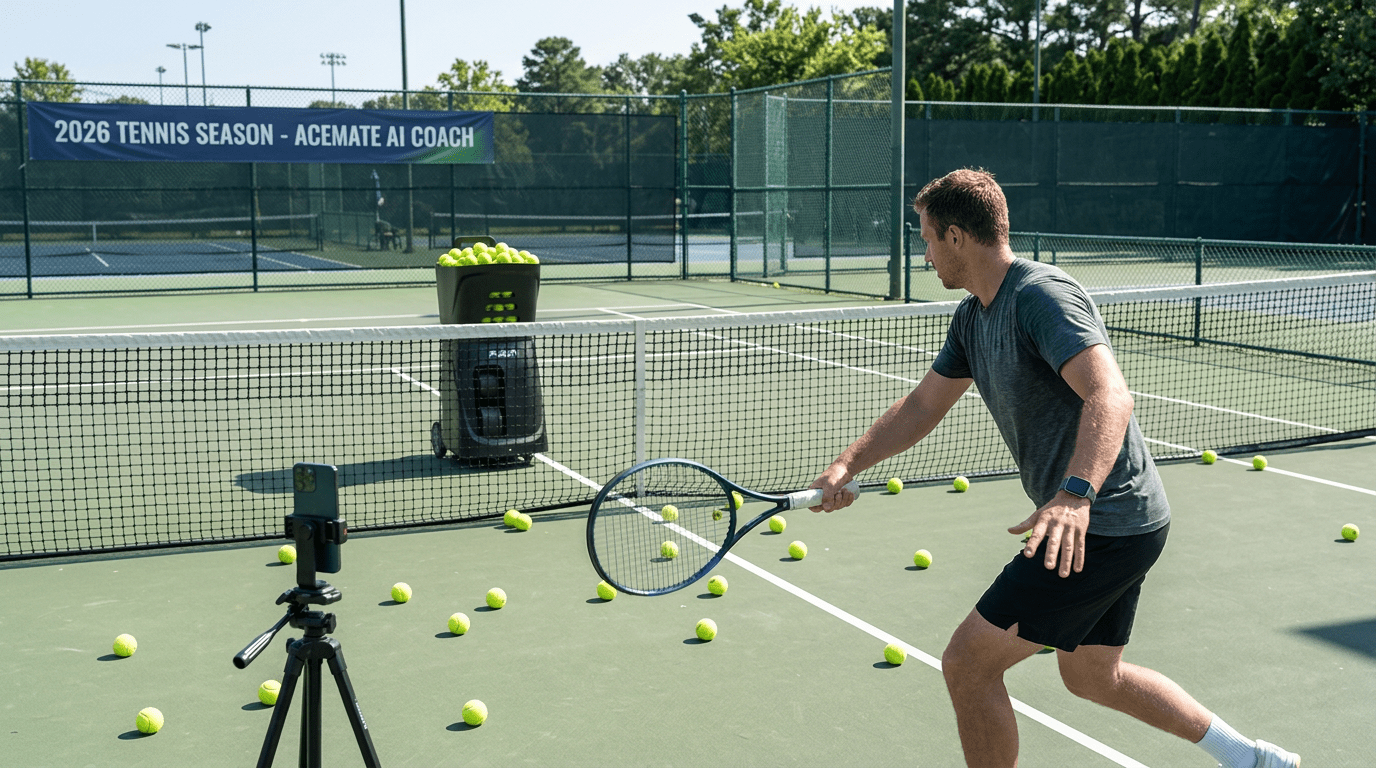
The most effective solo practice tools are: a tennis rebounder (consistent ball return for groundstroke repetition), a ball hopper full of balls (our Tourna Ballport 80 is ideal), targets/cones for serve and approach shot precision work, and a wall or backboard for basic rally work. See our self-coaching serve guide for a structured solo practice plan.
Do resistance bands help tennis players?
Significantly — resistance bands are the most evidence-based training tool for tennis injury prevention. Rotator cuff strengthening with bands is clinically proven to reduce shoulder injury risk. Forearm eccentric exercises (also done with bands or light weights) are the gold-standard treatment and prevention for tennis elbow. Any recreational player playing more than once a week should be doing 10 minutes of band work per session.
The Bottom Line
Start with resistance bands and disc cones — total cost under $55 CAD, immediate benefit to injury prevention and practice precision. Add an agility ladder when you’re ready to work on footwork seriously. A rebounder transforms solo practice if you play regularly without a reliable partner. These tools do what they promise. 🎾