A tennis bag is one of those things you don’t think about until you’re cramming a racket into a gym duffel and wondering why your grip tape smells like old gym shoes. Been there. Here’s what you actually need in 2026 — based on 25 years of carrying tennis gear to courts across Canada.
What Type of Bag Do You Actually Need?
| Bag Type | Racket Capacity | Best For | Typical Price (CAD) |
|---|---|---|---|
| Backpack | 1–3 rackets | Commuting, light players | $50–140 |
| Tote / Club bag | 2–4 rackets | Recreational club players | $60–170 |
| Tour bag (6-pack) | 6–9 rackets | Serious club players | $120–250 |
| Tour bag (12-pack) | 9–12 rackets | Coaches, competitive players | $200–350 |
| Sling bag | 1 racket | Quick hit, minimalist players | $30–70 |
For most recreational players who play 2–3 times per week, a quality backpack or tote is all you need. Tour bags are overkill unless you’re stringing multiple rackets, coaching, or genuinely need to carry equipment for multiple players (parents of competitive juniors).
Best Tennis Bags for 2026
🥇 1. HEAD Tour Team Backpack — Best Overall
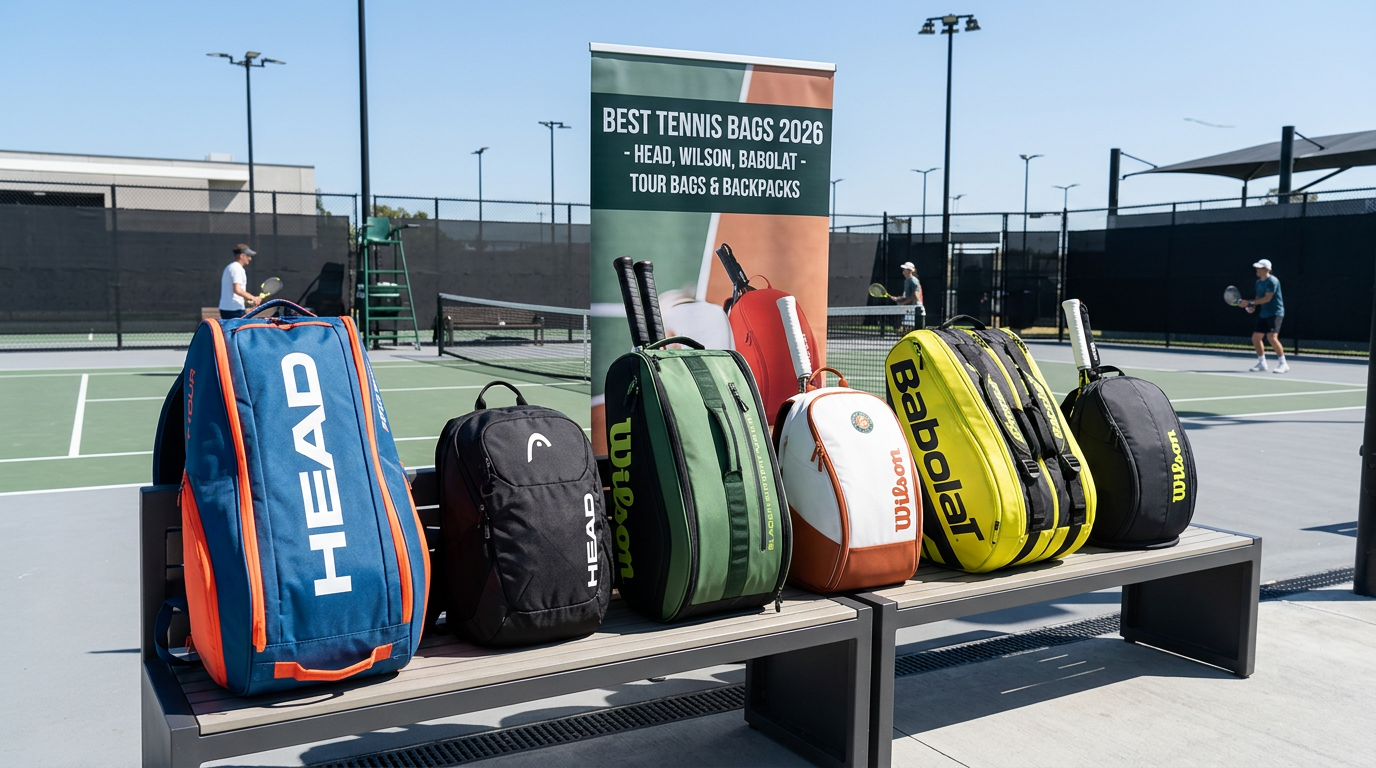
I’ve had mine for four years and it still looks sharp. Holds 2 rackets, separate ventilated shoe compartment to keep your bag smelling like a bag rather than a locker room, padded laptop sleeve, and comfortable straps for the walk from parking to court. The HEAD branding is a bonus for brand loyalists.
Capacity: 2 rackets + shoes + laptop + accessories | Price (Canada): $80–$120 CAD
✅ Pros: Excellent shoe compartment, durable construction, comfortable for commuting, professional appearance
❌ Cons: Limited to 2 rackets if you also need water bottle pocket access
🥈 2. Wilson Super Tour Backpack — Best Premium
The last tennis bag you’ll ever buy. Thermal-lined racket compartment protects your strings from temperature extremes (a real consideration in Canadian car trunks during summer or winter), loads of organisational pockets, and built to take serious abuse. If you play four times a week and want premium quality, this is it.
Capacity: 3 rackets + thermal protection + extensive organisation | Price (Canada): $130–$170 CAD
✅ Pros: Premium build quality, thermal lining for string protection, extensive organisation pockets
❌ Cons: Heavier than basic backpacks, premium price
🥉 3. Babolat Pure Aero Backpack — Best Lightweight
Clean, minimal, and notably light. Holds two rackets and all your essentials without bulk. If you walk or cycle to courts, this one won’t wear you out before you even pick up a racket. Babolat’s signature yellow accents make it visually distinctive on the court.
Capacity: 2 rackets + accessories | Price (Canada): $90–$130 CAD
✅ Pros: Lightweight construction, distinctive Babolat aesthetic, comfortable straps
❌ Cons: No dedicated shoe compartment, less storage than HEAD or Wilson equivalents
4. Tecnifibre Tour Endurance — Best Value Tote
If you prefer a tote over a backpack, Tecnifibre consistently delivers better value than HEAD or Wilson equivalents. Holds 4 rackets, organised pockets, significantly cheaper than the big three brands. The French brand has been quietly making excellent equipment for decades.
Capacity: 4 rackets + accessories | Price (Canada): $80–$120 CAD
✅ Pros: Excellent value, holds more rackets than equivalent backpacks, French build quality
❌ Cons: Less common in Canadian retail, tote style not for everyone
5. HEAD Sling Bag — Best for Quick Sessions
One racket, balls, wallet, keys. Done. The HEAD sling bag is perfect for hitting partners who don’t need to carry the whole kit — just enough for an hour of rallying. Lightweight, low-profile, and significantly cheaper than full backpacks.
Capacity: 1 racket + essentials | Price (Canada): $35–$60 CAD
✅ Pros: Minimalist design, very affordable, perfect for quick sessions
❌ Cons: Only fits one racket, limited storage
💡 What to Look for in a Tennis Bag
- Separate shoe compartment — trust me on this. Wet shoes against your rackets is a problem
- Racket protection — padded divider at minimum, thermal lining for premium
- Thermal lining — critical if you leave gear in your car in Canadian temperature extremes
- Ventilated pocket — for damp items so they don’t contaminate the rest of your kit
- External pockets — at least two for quick-access items like phone, keys, water bottle
- Comfortable straps — backpack straps with chest clip if you walk significant distances
Best Tennis Bags for Women in 2026
Most tennis bags are unisex, but a few brands offer designs specifically tailored for women players — typically with adjusted strap proportions, more refined colour palettes, and dedicated organisation for items like jewellery and personal care products.
Top women’s picks: Wilson Women’s Tour Tote (clean design, holds 3 rackets), HEAD Maria Sharapova Series Backpack (legacy product line, well-built), Babolat Pure Aero Women’s Backpack (lighter and more refined than the unisex version).
My Pick
The HEAD Tour Team Backpack is what I use and what I recommend for most recreational players. Perfect size, excellent build quality, and the HEAD branding won’t hurt your court credibility. If you want premium and don’t mind the price, upgrade to the Wilson Super Tour for the thermal protection alone.
🎾 Complete Your Court Look
Got the bag sorted. Now sort the attitude. The “You’ve met your match” hoodie from LooseTennisBalls pairs perfectly with any of the bags above. Show up looking ready to play — even if your forehand has other plans.
Related Reading
- Best Tennis Rackets for Recreational Players (2026)
- Best Hard Court Tennis Shoes (2026)
- Best Tennis Balls for Longevity and Performance
- HEAD vs Wilson vs Babolat Brand Guide
Frequently Asked Questions
What size tennis bag do I need?
For most recreational players, a 2–3 racket backpack is the right size. Tour bags (6+ rackets) are overkill unless you’re a coach, competitive player, or carry equipment for multiple players. If you only play singles and have one main racket plus a backup, a 2-racket backpack like the HEAD Tour Team is perfect.
Do I really need a thermal lined bag?
If you frequently leave your tennis gear in your car — yes. Canadian temperature extremes (cold winters, hot summers) significantly affect string tension over time. Strings stored in a hot car trunk lose tension faster; strings in cold conditions become brittle. Thermal lining mitigates both problems.
Are tennis backpacks worth the extra money over regular backpacks?
Yes — for the racket protection and shoe compartment alone. Regular backpacks don’t accommodate racket length properly, lack ventilated shoe storage, and don’t protect strings from impact. The $80–$120 you spend on a quality tennis backpack will save you money in racket damage and string replacement over time.
What’s the difference between a tour bag and a regular tennis bag?
Tour bags (6, 9, or 12 racket capacity) are designed for serious competitive players and coaches who need to carry multiple rackets, often pre-strung at different tensions. They’re typically larger duffel-style bags worn over the shoulder. Recreational players almost never need tour bags — a 2–3 racket backpack covers all realistic recreational needs.
Which tennis bag brand is best?
HEAD, Wilson, and Babolat all make excellent tennis bags at every price point. HEAD offers the best balance of features and price for most recreational players. Wilson offers the most premium options with thermal protection. Babolat offers the most distinctive aesthetic. Tecnifibre offers the best value if you can find it.
How long should a quality tennis bag last?
A quality tennis bag from HEAD, Wilson, or Babolat should last 4–7 years with regular use. The first parts to fail are typically zippers (3–4 years), followed by strap stitching (5–7 years). Cheap tennis bags tend to fail at zippers within 1–2 years. The price difference reflects build quality reality.