
Tennis has more unwritten rules than almost any other sport. The formal rulebook is available from the ITF and runs to dozens of pages. But the unwritten rules — the etiquette that distinguishes the experienced club player from the newcomer — live nowhere except in the collective knowledge of the players around you. Here’s the complete guide to what actually matters.
Before the Match
Be on Time — Or Early
Arriving on time means arriving 5 minutes early. Arriving “on time” — i.e., when the court time starts — means the other player has been waiting, the court time is running, and you haven’t warmed up. In recreational tennis, arriving when the court opens is late. This is universally understood and universally resented when violated.
Bring Your Own Balls (Or Agree Who Does)
An unresolved ball situation — two players show up and each expected the other to bring them — is an avoidable embarrassment. The convention in most clubs: whoever books the court brings the balls first session; alternate thereafter. If you’re the regular booker, just bring them and let the cost balance out over time. Fresh Wilson US Open balls are the right call for any session you care about.
Warm Up Properly — And Let Them Warm Up Too
The warmup is not a place to start competing. Rally crosscourt, not aggressively crosscourt. Hit at 60–70% pace. Let your opponent find their rhythm. Serving full-pace bombs in the warmup is the tennis equivalent of shaking someone’s hand by trying to break it — technically acceptable but communicating exactly the wrong thing.
During the Match
Calls — Benefit of the Doubt
The ITF rules are clear: if you are not certain the ball was out, it is in. This is the cornerstone of self-officiated tennis. At recreational level, 90% of conflicts come from this rule being selectively forgotten. The ball has to be clearly out to be called out. Doubt = in. Always.
Calling the Score
The server calls the score before serving. Not suggested. Required. Call game score first, then point score. “3-2, 30-15.” Skipping this is how score disputes happen — and score disputes are the most time-consuming, atmosphere-destroying events in recreational tennis.
Net Cords and Edges
Lucky net cords and edge shots happen. They are perfectly legal. The convention is a brief acknowledgment — a hand raised, “sorry,” a slight nod. You don’t need to offer a point back. You don’t need to perform self-flagellation. But some acknowledgment that luck was involved maintains the social fabric. Players who pump their fist on a net cord winner as though they planned it are making a social error, not a rules violation.
Don’t Walk Behind an Adjacent Court During a Rally
If you need to retrieve a ball that’s rolled onto an adjacent court, wait for the point to finish. Walking behind a player mid-rally is a genuine safety issue and an etiquette violation of the highest order. This applies even if the ball is clearly visible 3 metres off the court. Wait. It takes 10 seconds.
Returning Balls From Adjacent Courts
When a ball from another court rolls onto yours, wait for the rally to end, then return it without excessive force toward the players — not smashed back with a forehand winner. A gentle roll or accurate underhand toss is correct.
Keep Your Volume in Check
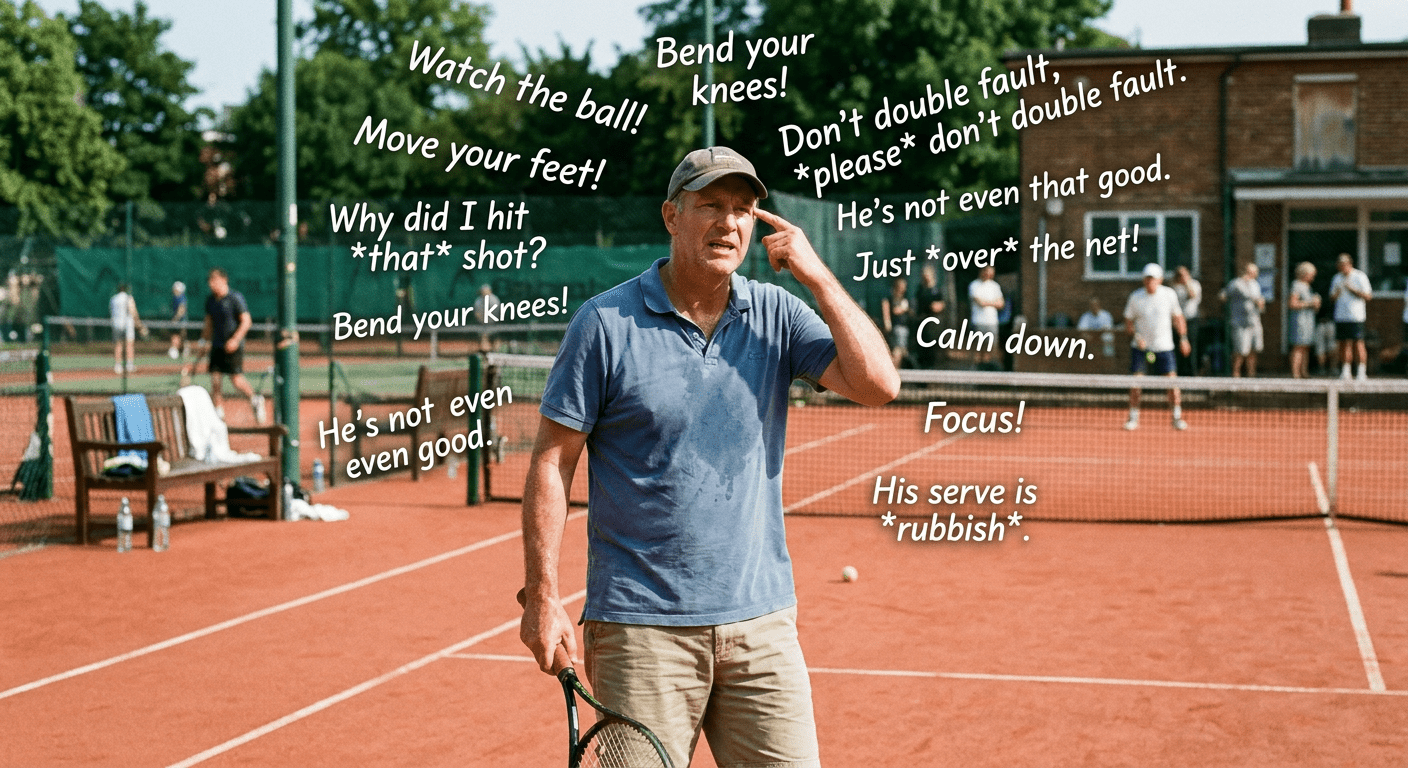
Celebrations, frustration, coaching yourself through a problem — all valid parts of tennis. Volume that consistently disrupts adjacent courts is not. One “come on” after a breakthrough point: fine. Ten-minute discussions with yourself after every missed shot: not fine. The court next to yours exists.
After the Match
Shake Hands at the Net
Non-optional. Always. Win or lose. The handshake acknowledges that you just spent 90 minutes competing with another person and you respected them enough to do it properly. Skipping this at recreational level is a social mark that people remember far longer than any score.
Don’t Over-Explain Your Loss
A brief “well played, you served brilliantly” is always right. A five-minute breakdown of your hamstring issue, the court lighting, and the new strings you haven’t dialled in yet is the territory of type 2 on our 12 types of club players list. Your opponent won. Acknowledge it cleanly.
Clear the Court Promptly
If the next players are waiting, collect your balls and gear efficiently. Post-match conversation is fine — off the court. Holding up the next booking while you replay game five is inconsiderate in any club.
| Situation | Correct Response | Incorrect Response |
|---|---|---|
| Ball lands on the line | Call it in | Call it out because “it felt out” |
| Lucky net cord winner | Brief acknowledgment | Celebrate as if planned |
| You’re late to the court | Apologise, don’t take court time from them | Show up and act like nothing happened |
| Ball rolls onto adjacent court | Wait for their rally to end | Walk on and retrieve mid-rally |
| You win easily | Genuine “well played, tough match” | Detailed analysis of why they lost |
🎾 One More Rule
Wear things that say what you mean. The “I’m Not Arguing, Just Returning Your Serve” tee from LooseTennisBalls is technically a statement of etiquette in T-shirt form. Available on Redbubble.
Related Reading
- 7 Types of Opponents at Every Tennis Club
- 12 Types of Club Tennis Players
- Tennis for Adults: Complete Beginner Guide
- How to Find a Tennis Partner
Frequently Asked Questions
What are the basic rules of tennis etiquette?
The five most important: benefit of the doubt on line calls (close = in), call the score before every serve, shake hands at the net after every match, don’t walk behind adjacent courts mid-rally, and be on time. These cover 90% of the etiquette situations that actually come up in recreational club tennis.
What do you say after a tennis match?
“Good match” or “well played” at the net handshake is always correct. If you lost: brief, genuine acknowledgment of what they did well. If you won: don’t offer extensive post-mortems of why they lost. The handshake and brief exchange take 30 seconds and end the match appropriately regardless of the result.
Who calls the score in tennis?
The server always calls the score before serving, starting with the server’s score. “30-15” means the server has 30 points, the receiver has 15. Game score is called first, then point score: “3-2, 30-15.” If there’s ever a dispute about the score, the convention is to go back to the last score both players agreed on.
The Bottom Line
Tennis etiquette isn’t about being formal — it’s about making the game enjoyable for everyone on and around your court. The players who follow these unwritten rules make tennis better. The ones who don’t tend to find their booking requests going unanswered. Be the former. 🎾