Most recreational players choose a tennis racket based on three things: brand, price, and how it looks. Weight rarely makes the list. This is a problem — racket weight is one of the most important variables affecting how the racket actually plays, how much arm fatigue you’ll experience, and whether you’ll injure yourself in the process.
After 25 years of recreational tennis and watching club players struggle with rackets that are wrong for their physical profile, here’s the complete guide to choosing the right tennis racket weight in 2026.
Tennis Racket Weight Categories
| Weight Range | Category | Best For | Trade-Off |
|---|---|---|---|
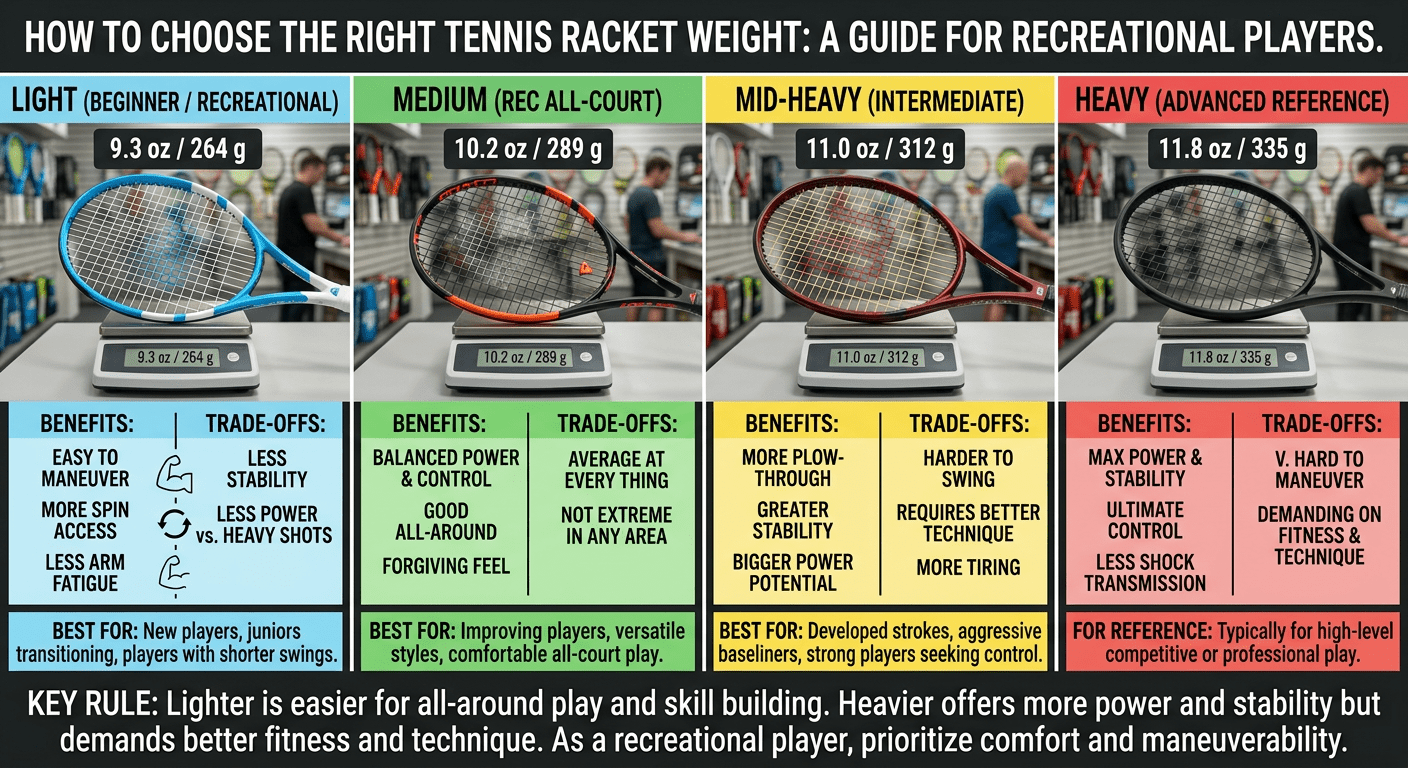
| Under 270g | Ultralight | Beginners, juniors, smaller-framed adults | Less stability, less power on hard hits |
| 270–290g | Light | Recreational players, seniors, arm-sensitive | Slight power reduction |
| 290–310g | Medium | Most club players, balanced performance | Sweet spot — minimal trade-offs |
| 310–330g | Heavy | Advanced club players, strong baseliners | More fatigue, harder to manoeuvre |
| Over 330g | Tour Heavy | Competitive/professional players | Significant fatigue for recreational use |
Note: Manufacturer-listed weights are unstrung. Strung weight adds approximately 15–20g. A racket listed as 295g unstrung will play at roughly 310–315g strung.
What Racket Weight Actually Affects
Power
Counterintuitively, heavier rackets generate more power per swing — assuming you can swing them at sufficient speed. The mass behind the ball at impact transfers more energy. But: if the racket is too heavy for you to swing fast, you actually lose power. The right weight is heavy enough to provide stability but light enough that you can still swing aggressively.
Manoeuvrability
Lighter rackets are easier to swing, easier to position, and faster to bring through the contact zone. Critical for volleys, defensive shots, and quick reactions at the net. Heavier rackets feel sluggish in these situations.
Stability
Heavier rackets resist twisting on off-centre hits — meaning you maintain control even when you don’t make perfect contact. Lighter rackets twist more easily, which causes balls to spray on miss-hits.
Arm Fatigue and Injury Risk
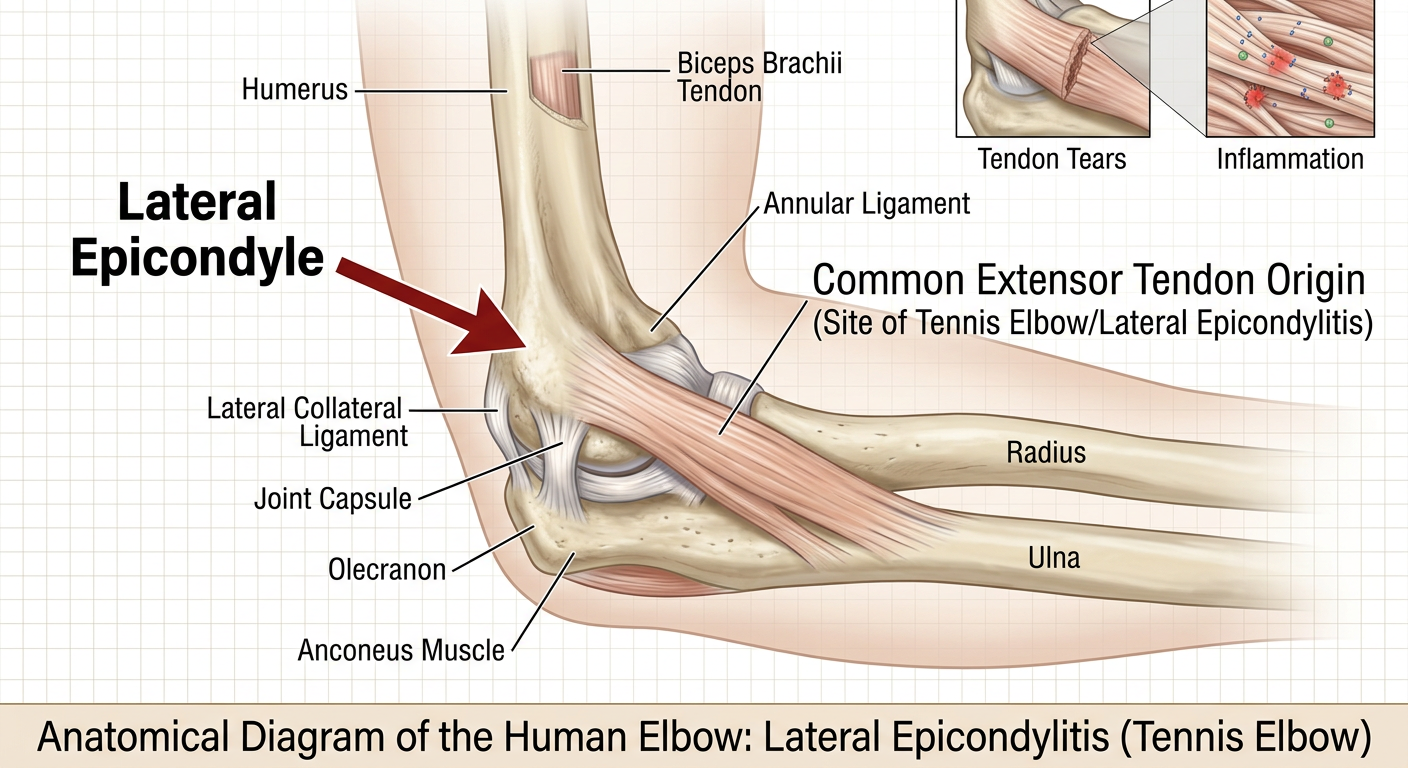
This is where weight selection becomes a health issue. Swinging a racket that’s too heavy for your body type and conditioning level over the course of a 90-minute match leads to progressive fatigue, deteriorating technique, and significantly increased risk of tennis elbow, shoulder problems, and wrist injuries. See our tennis elbow prevention guide for the full breakdown.
How to Determine the Right Weight for You
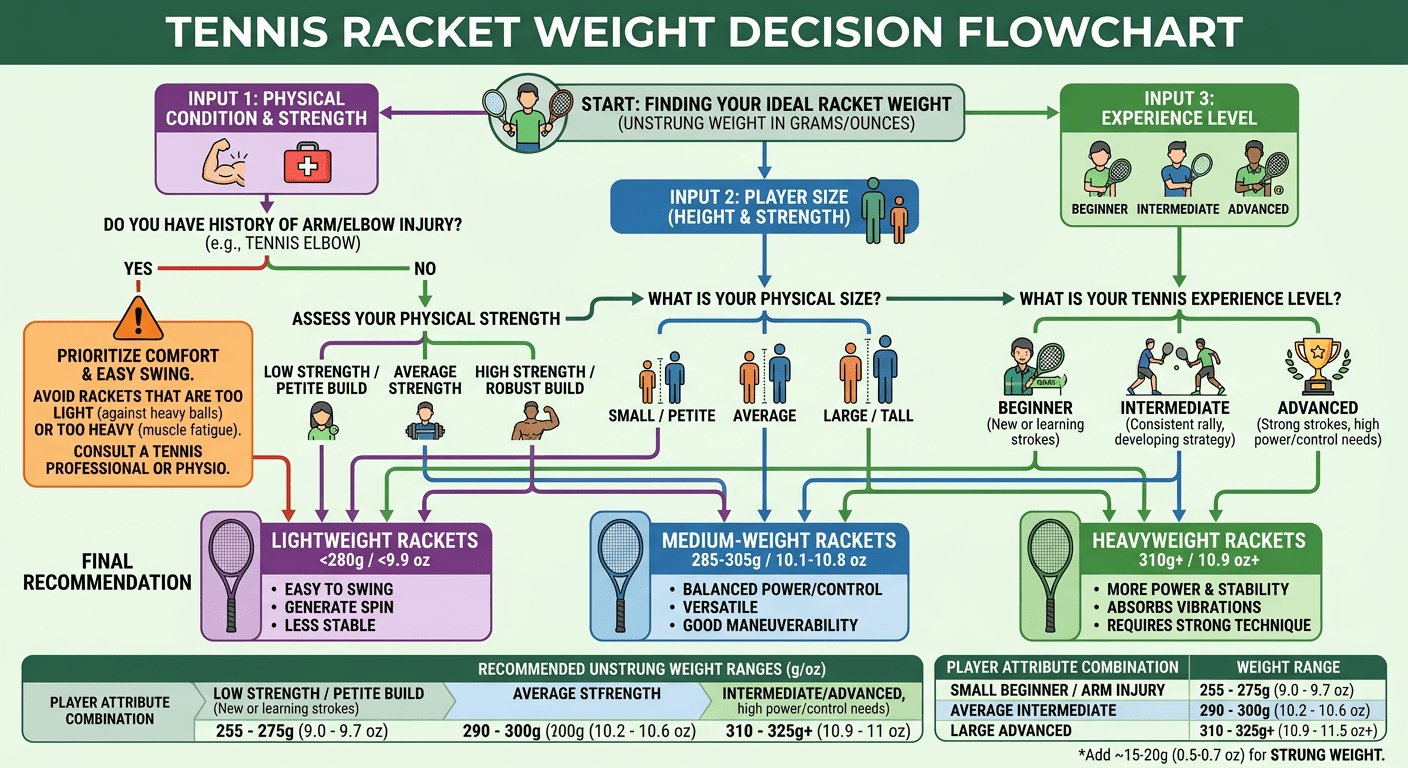
Step 1: Honest Self-Assessment
- Body size: Larger and stronger players can handle heavier rackets. Smaller-framed players benefit from lighter rackets.
- Strength training: Players with consistent upper-body strength training can handle heavier rackets than those without.
- Tennis experience: Beginners benefit from lighter rackets that are easier to swing. Advanced players can leverage heavier rackets for stability.
- Existing arm issues: Any history of tennis elbow, shoulder problems, or wrist issues should push you toward lighter weights.
- Playing frequency: Players who play 3+ times per week need lighter rackets to manage cumulative fatigue.
Step 2: Match Weight to Player Profile
- Adult beginner (any size): 250–290g — prioritise manoeuvrability and ease of swing
- Recreational player (smaller frame): 270–290g
- Recreational player (average frame): 285–305g
- Recreational player (larger/stronger): 295–315g
- Advanced club player: 305–325g
- Senior recreational player (60+): 250–285g — prioritise lighter weight for joint health
- Player returning after injury: Drop one weight category from your previous racket
Step 3: Demo Before Buying
Most pro shops offer racket demo programs. Demo two rackets in different weight categories before committing — the difference between a 295g and a 305g racket is more noticeable than you’d expect. Pay attention to how your arm feels after 30 minutes of hitting, not just how the racket feels in your first few swings.
Common Weight Selection Mistakes
Mistake 1: Copying What the Pros Use
Pro rackets are typically 320–360g+ strung. Pros are professional athletes who train daily, have customised arm-friendly setups, and have spent decades building tennis-specific muscle memory. Recreational players who try to use pro-spec weights almost always develop arm injuries within months.
Mistake 2: Going Too Light Out of Caution
The opposite mistake. Ultralight rackets (under 260g) lack stability, transmit more vibration on off-centre hits (paradoxically increasing arm stress), and offer minimal power. The 270–300g range is the recreational sweet spot for almost everyone.
Mistake 3: Not Accounting for Strung Weight
Manufacturer-listed weights are unstrung. The racket you actually play with is 15–20g heavier than the marketing material says. Always factor this in — a “295g” racket plays as 310–315g.
Best Rackets by Weight Category for 2026
- Ultralight (236g): HEAD Ti.S6 — the most forgiving recreational racket available
- Light (270g): Wilson Federer 105 — entry-level frame
- Medium-Light (280g): HEAD Boom MP — mid-range upgrade
- Medium (295g): Wilson Clash 100 v2 — best arm comfort
- Medium-Heavy (300g): Babolat Pure Drive — power player choice
- Heavy (315g+): Wilson Pro Staff 97 — advanced player frame
See our complete tennis racket guide for full reviews of these and other recommended frames.
View Lightweight Tennis Rackets on Amazon.ca
Customising Racket Weight
If you’re between weight categories or want to fine-tune, weighted lead tape allows you to add weight to a lighter racket without buying a new frame. Adding 4–8g of lead tape to the head of a racket significantly changes its feel and performance.
Caution: weight customisation is best done with professional guidance from a stringer or pro shop. Adding weight in the wrong locations can throw off the racket’s balance and create unintended performance issues.
🎾 Match the Right Racket. Match the Right Attitude.
Got the perfect racket weight sorted? The “You’ve met your match” hoodie from LooseTennisBalls is the off-court complement to your perfectly-weighted on-court setup. Show up looking ready.
Related Reading
- Best Tennis Rackets for Recreational Players (2026)
- Tennis Racket Grip Size Guide
- Tennis Elbow Prevention and Treatment
- HEAD vs Wilson vs Babolat Brand Guide
Frequently Asked Questions
What weight tennis racket should I use?
Most recreational players should use a racket weighing 270–305g unstrung (290–325g strung). Beginners and arm-sensitive players benefit from the lighter end (270–290g). Experienced club players can handle the heavier end (290–305g). Professional weights (320g+) are inappropriate for recreational use and significantly increase injury risk.
Is a heavier tennis racket better?
For some players, yes. Heavier rackets provide more stability and power per swing — but only if you can swing them at sufficient speed without fatigue. For recreational players, heavier rackets often cause arm fatigue and injury before delivering performance benefits. The right weight is the one you can swing aggressively for 90+ minutes without losing technique.
What’s the lightest tennis racket?
The HEAD Ti.S6 at 236g unstrung is the lightest mainstream tennis racket and the most forgiving recreational frame available. It’s the recommended choice for absolute beginners, players returning to tennis after a long break, and anyone with arm sensitivity issues.
Can a tennis racket be too light?
Yes. Ultralight rackets (under 260g) lack stability, allowing them to twist on off-centre hits. This actually transmits more vibration to the arm than a moderately heavier racket would. Most recreational players benefit from rackets in the 270–300g range, which provide enough stability without excessive fatigue.
How do I add weight to my tennis racket?
Adhesive lead tape applied to the racket head or handle is the standard way to add weight. Most pro shops sell tennis-specific lead tape ($10–$15 CAD per roll) and can guide proper placement. Start with small additions (4–6g total) and demo before adding more — small weight changes create significant performance differences.
Should women use lighter tennis rackets?
Not necessarily — racket weight selection is based on physical strength, conditioning, and playing style rather than gender. Many women players use 290–305g rackets effectively. The right weight is the one that matches your body, conditioning, and how you actually play. Don’t auto-default to ultralight rackets if you can comfortably handle medium weights.
The Bottom Line
For most recreational players in 2026, the answer is 280–300g unstrung weight. Light enough to swing aggressively for 90 minutes, heavy enough to provide stability and power. Demo before buying. Don’t copy the pros. Listen to your arm — it knows what works for you. 🎾