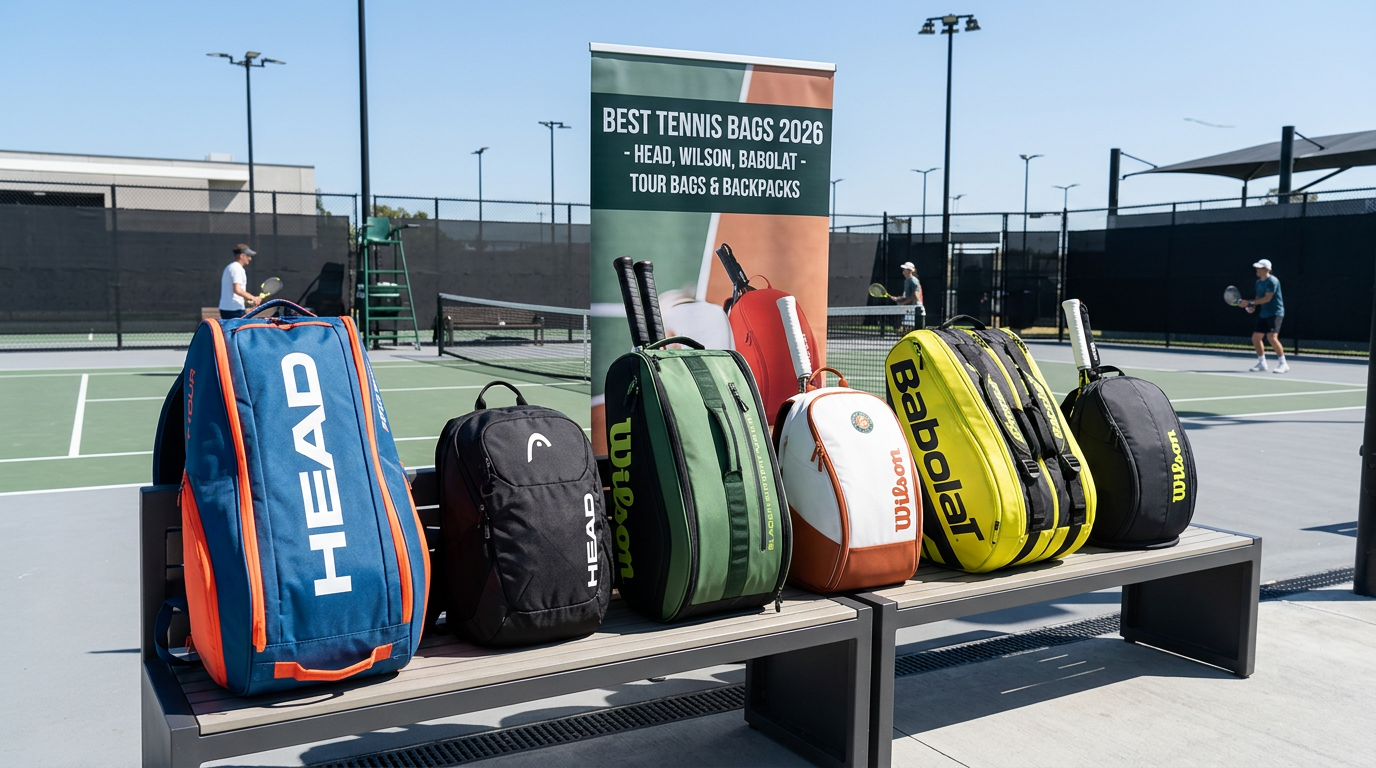
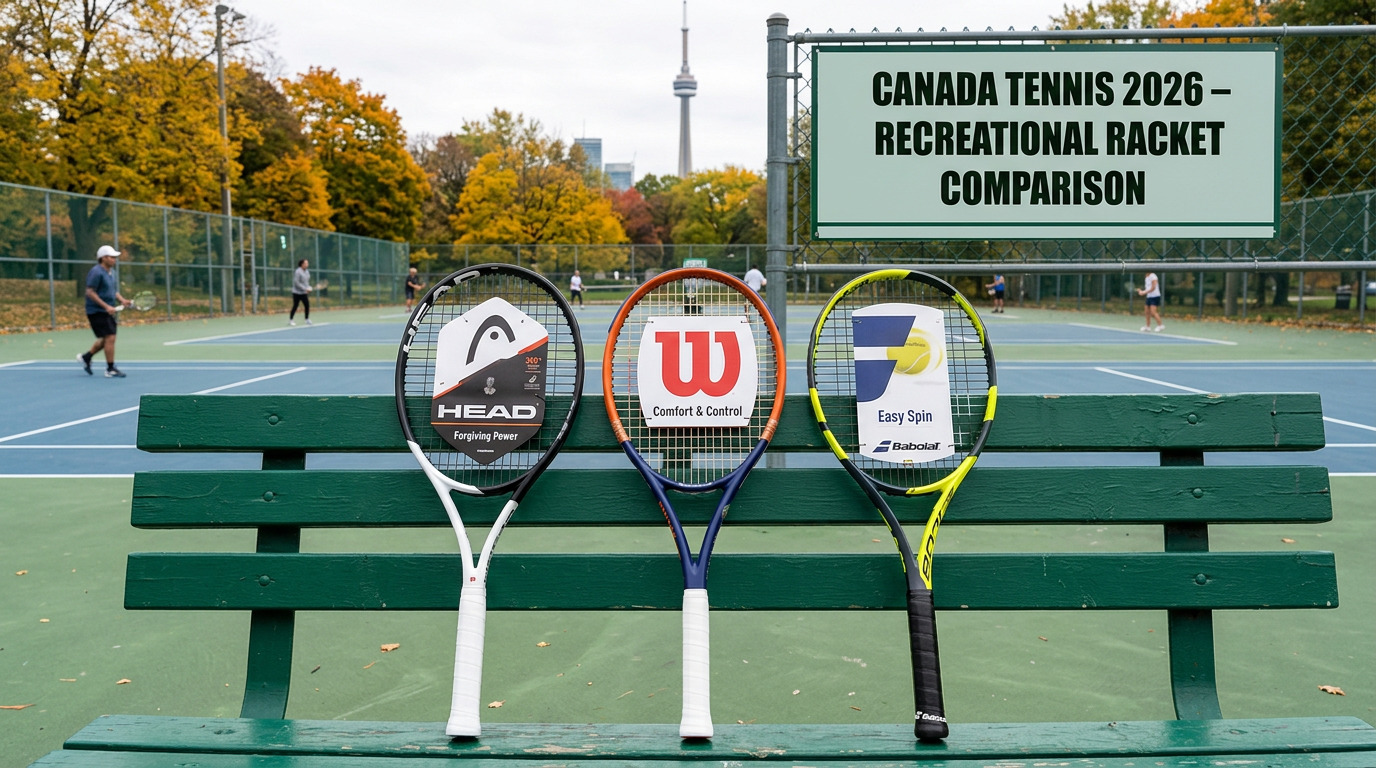
Walk into any tennis club in Canada and you’ll see HEAD, Wilson, and Babolat in roughly equal numbers. All three brands make genuinely excellent rackets. All three have professional players at the very top of the game using their equipment. And all three have design philosophies distinct enough that the wrong brand choice can leave a recreational player fighting their own gear rather than enjoying their tennis.
Full disclosure upfront: I’m a committed HEAD fan. I’ve played with HEAD rackets for over 20 years. But I’ve hit with Wilson and Babolat extensively over that time, and I’ll give you my honest assessment of all three — including where the others genuinely win. My bias is declared. My analysis is still accurate.
📊 The Big Three by the Numbers (2026)
• HEAD rackets are used by more ATP Tour players than any other brand
• Wilson is the world’s best-selling tennis racket brand by volume, sold in over 100 countries
• Babolat holds the record for the world’s best-selling individual racket — the Pure Drive has sold millions of units globally
• Carlos Alcaraz (World No. 1, early 2026) plays Babolat. Novak Djokovic plays HEAD. Coco Gauff plays Wilson.
• Tennis equipment market in Canada has grown alongside Tennis Canada’s reported 40%+ participation increase since 2020
HEAD: The Tour Player’s Brand
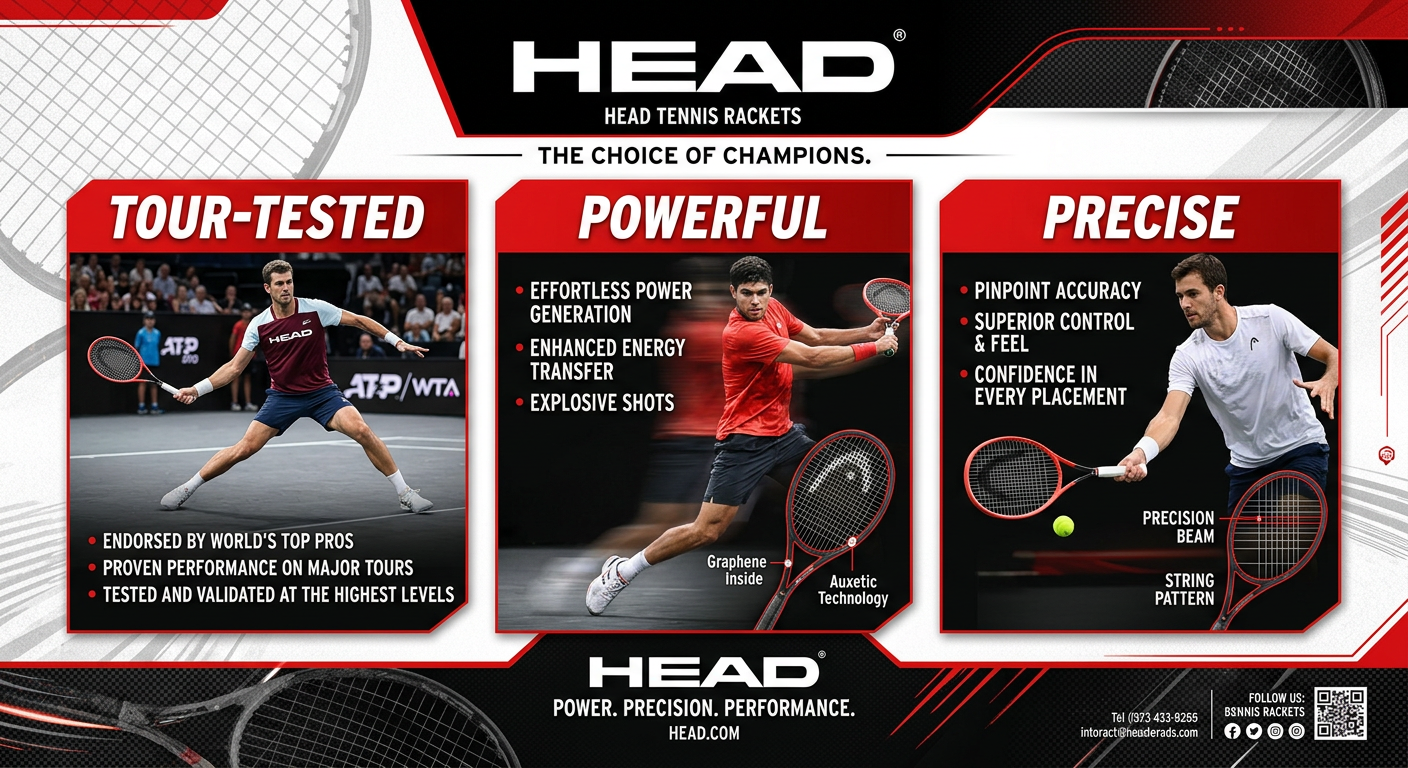
HEAD is the most represented brand among professional players on the ATP Tour. That market dominance at the elite level reflects something real about HEAD’s engineering philosophy: their frames are built to provide feedback, power, and precision at the highest level of play, then scaled across their product range to recreational players.
Novak Djokovic — who holds the all-time record for Grand Slam titles — has played with HEAD rackets throughout his professional career. His frame of choice, the HEAD Speed Pro, is available in modified consumer versions for recreational players. The DNA of that racket is in what you pick up at your local sporting goods store.
HEAD rackets tend to feel solid and slightly stiffer than Wilson equivalents. The feedback through the frame is excellent — you can feel where on the string bed you made contact, which helps players develop feel and consistency over time. The power profile is high without feeling uncontrollable, which makes HEAD frames forgiving for recreational players who don’t hit with perfect technique on every ball.
Best HEAD Rackets for Recreational Players in 2026
HEAD Ti.S6 — Best for Maximum Forgiveness
The most forgiving recreational racket in the HEAD range. 115 sq in head size, titanium frame at 236g, enormous sweet spot. If you’re returning to tennis or prioritise forgiving equipment over everything else, the Ti.S6 remains the standard recommendation after years on the market.
Price range: $80–$130 CAD
HEAD Boom MP — Best Mid-Range HEAD Pick
The Boom series represents HEAD’s current mid-range sweet spot for club players — more performance than the Ti.S6, more forgiveness than the Speed Pro. The Auxetic technology in the frame creates a livelier, more responsive feel than previous HEAD mid-range offerings.
Price range: $180–$240 CAD
HEAD Speed MP — Best for Advancing Club Players
The Speed series is Djokovic’s DNA translated to a consumer frame. More demanding than the Ti.S6 or Boom, but rewarding for club players with consistent ball striking who want professional-level feedback. If you’ve been playing consistently for 2+ years and want a frame that grows with your game, this is the direction.
Price range: $220–$290 CAD
✅ The HEAD verdict: Consistent quality across all price points. Best tour pedigree of the three brands. The Ti.S6 remains the definitive beginner-to-intermediate recommendation. And yes — I’m biased. But I’m also right.
Wilson: The American Classic
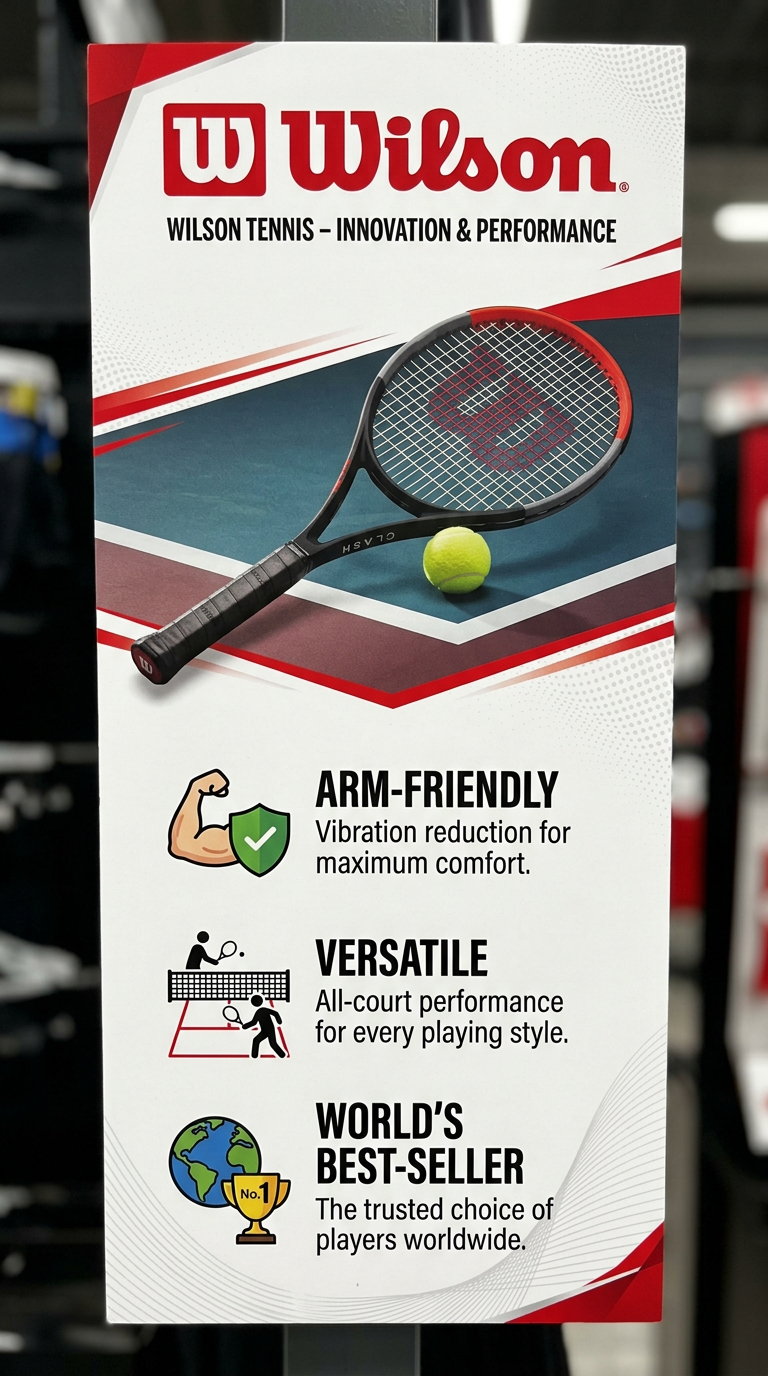
Wilson is the world’s best-selling tennis racket brand by volume — a position earned through decades of genuine innovation and a roster of professional players that reads like a hall of fame. Roger Federer played Wilson for his entire professional career, winning 20 Grand Slams with the Pro Staff. Serena Williams, Coco Gauff, and Stefanos Tsitsipas all play Wilson. The brand’s depth of professional representation across both tours is exceptional.
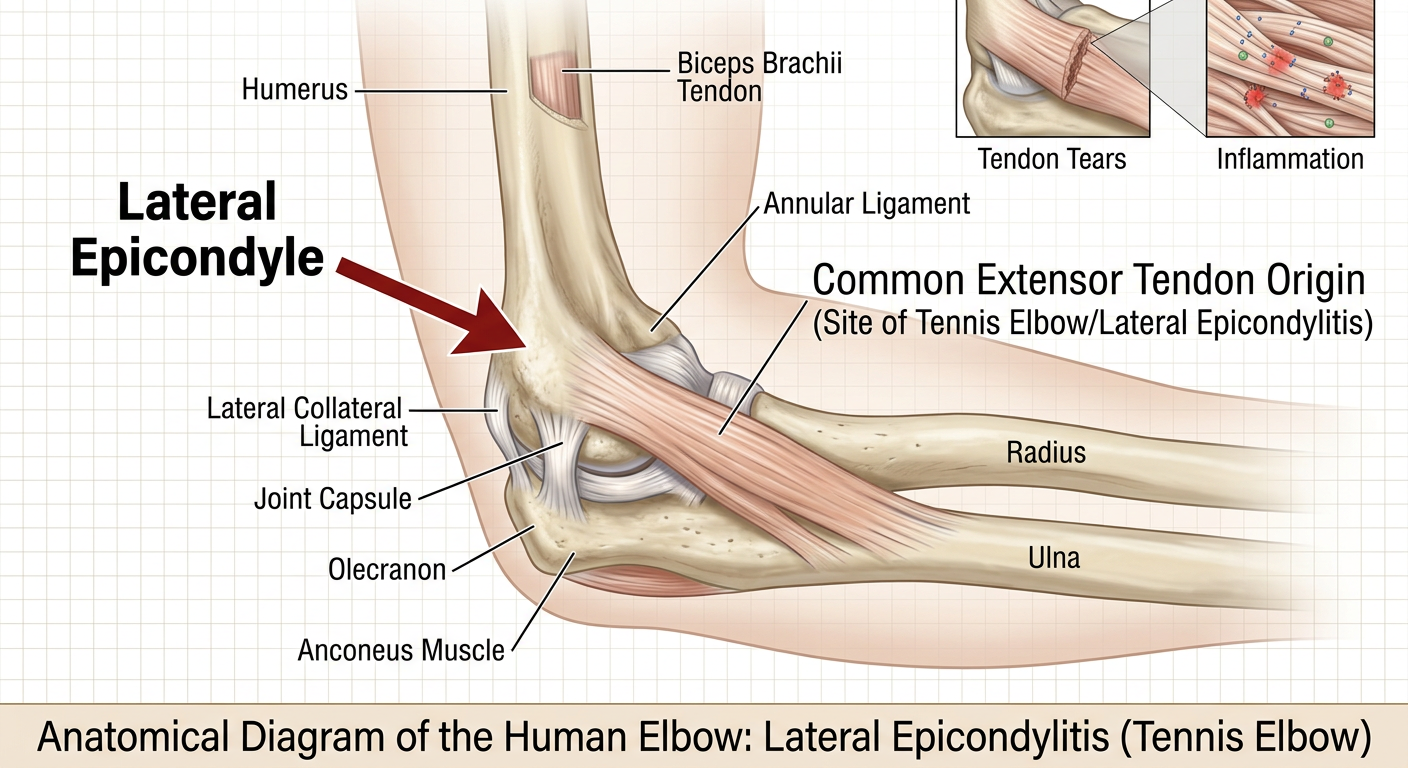
Where Wilson distinguishes itself from HEAD and Babolat is arm comfort and variety. Their Clash technology — introduced in 2019 and refined through subsequent generations — represents a genuine engineering breakthrough. Carbon fibre mapping allows specific sections of the frame to flex in ways conventional carbon construction cannot, creating a frame that bends into the ball on contact rather than transmitting shock rigidly to the player’s arm. For recreational players with any history of elbow issues, this matters enormously.
Wilson also offers more variety in their recreational range than either HEAD or Babolat — different series for power players, control players, arm-sensitive players, and beginners. If you have a specific playing style need, Wilson’s lineup likely has a frame engineered specifically for it.
Best Wilson Rackets for Recreational Players in 2026
Wilson Clash 100 v2 — Best for Arm Comfort
If you’ve dealt with tennis elbow or have any history of arm sensitivity, the Clash 100 v2 deserves serious consideration before anything else. Wilson’s carbon mapping technology makes it the most flexible, arm-friendly high-performance frame available. After 25 years of hard court play, my elbow has opinions — and the Clash 100 is the frame it complains least about.
Price range: $220–$280 CAD
Wilson Burn 100 v5 — Best All-Round Wilson
The Burn series hits the middle of Wilson’s recreational range — more power than the control-oriented Blade, more stability than the Clash. If you’re a recreational player who just wants a dependable, versatile Wilson frame without overthinking the series distinctions, the Burn 100 is the answer.
Price range: $160–$210 CAD
Wilson Federer 105 — Best Entry Level Wilson
Named for the greatest player in the brand’s history, the Federer 105 is Wilson’s accessible entry-level recreational frame. Larger head size (105 sq in), lightweight at 270g, and priced accessibly for beginners. It will give a beginner everything they need to enjoy the sport and improve consistently.
Price range: $60–$90 CAD
✅ The Wilson verdict: Best arm comfort in the category. Most variety for different playing styles. If elbow health is a concern or you’ve never settled on a preferred playing style, Wilson is where I’d look first — even as a committed HEAD player.
Babolat: The French Powerhouse
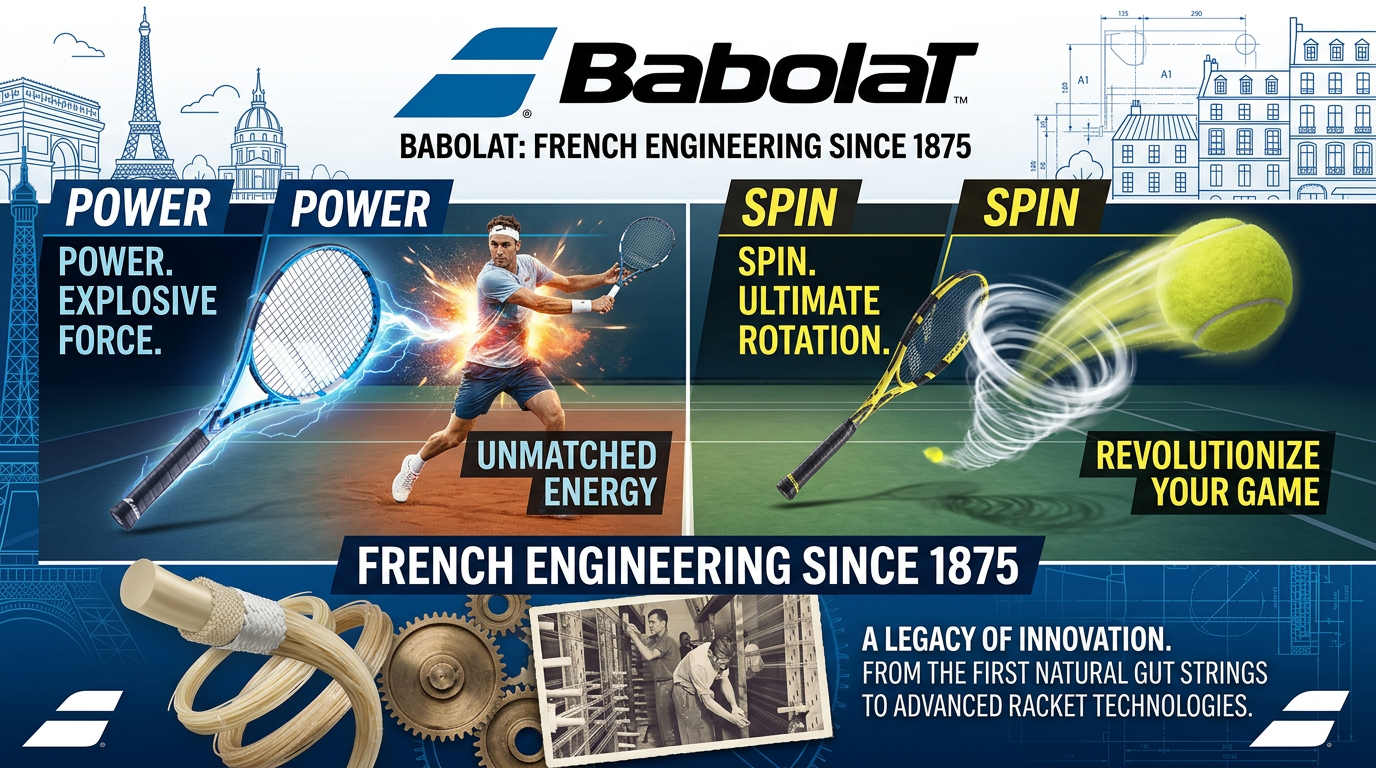
Babolat has a claim no other tennis brand can make: they invented tennis string. Founded in Lyon, France in 1875 by Pierre Babolat, the company produced the world’s first natural gut string from sheep intestine — a product they still manufacture today. They didn’t start making rackets until 1994, which makes their rise to one of the world’s top three racket brands in just 30 years a remarkable achievement.
Carlos Alcaraz — who ended 2025 ranked World No. 1 after winning at Roland Garros and Wimbledon — plays Babolat Pure Aero. Aryna Sabalenka, the world’s top-ranked women’s player as of early 2026 per the WTA, plays Babolat Pure Drive. The brand’s association with powerful, aggressive baseline tennis is not marketing — it’s a genuine reflection of their racket design philosophy.
Babolat rackets prioritise power and spin generation over feel and arm comfort. Their Woofer system — a unique string interaction technology at the grommets — allows strings to move more freely on contact, generating additional spin without the player needing to consciously swing differently. For recreational players who want more pace and topspin on their groundstrokes, Babolat delivers that profile more naturally than either HEAD or Wilson.
The honest caveat: Babolat rackets are generally stiffer than Wilson equivalents, which means more vibration transmitted to the arm on off-centre hits. Players with existing elbow issues should approach Babolat with caution and test before buying — the Pure Drive in particular is a demanding frame for arm-sensitive players.
Best Babolat Rackets for Recreational Players in 2026
Babolat Pure Drive — Best for Power Players
One of the world’s best-selling individual rackets for two decades. The Pure Drive is the choice of aggressive baseline players who want serious power and spin behind their groundstrokes. Not the most forgiving frame on off-centre hits, but when you find the sweet spot, the ball goes where you want it at the pace you want.
Price range: $220–$280 CAD
Babolat Drive Max 110 — Best for Beginners and Returners
Babolat’s answer for recreational players who want brand quality without the demanding performance profile of the Pure Drive. The Drive Max 110 has a larger head size (110 sq in), lighter weight, and more forgiving sweet spot — designed specifically for players at the earlier stages of their recreational tennis journey.
Price range: $80–$120 CAD
Babolat Pure Strike 100 — Best for Control-Focused Players
While the Pure Drive is about power, the Pure Strike is Babolat’s control-oriented frame — more precise, slightly less explosive, and better suited to players who prefer placing the ball rather than hitting through it. Suits players who like a flatter hitting style with precise placement over heavy topspin baseline aggression.
Price range: $200–$260 CAD
✅ The Babolat verdict: Best for power and spin generation. Best heritage in string technology. Less ideal for arm-sensitive players. If you hit hard and want more pace behind your shots — this is your brand.
What About Other Brands? (Yonex, Tecnifibre, Prince)
The big three dominate shelves and conversations, but three other brands deserve mention for specific use cases:
Yonex — The Japanese brand has deep roots in badminton and tennis. Their EZONE series is particularly strong for recreational players seeking arm comfort comparable to Wilson Clash. Strong tour representation including Hubert Hurkacz. Solid alternative for players who want arm-friendly performance outside the big three.
Tecnifibre — A French brand with strong tour representation. Their T-Fight series offers precision-focused frames for club players. Less widely available in Canadian retail than the big three.
Prince — The original inventors of the oversized racket head are criminally underrated at the recreational price point. Consistently delivers quality at lower prices than HEAD or Wilson equivalents. Worth considering for budget-conscious players who want genuine performance.
HEAD vs Wilson vs Babolat — Full Comparison Table
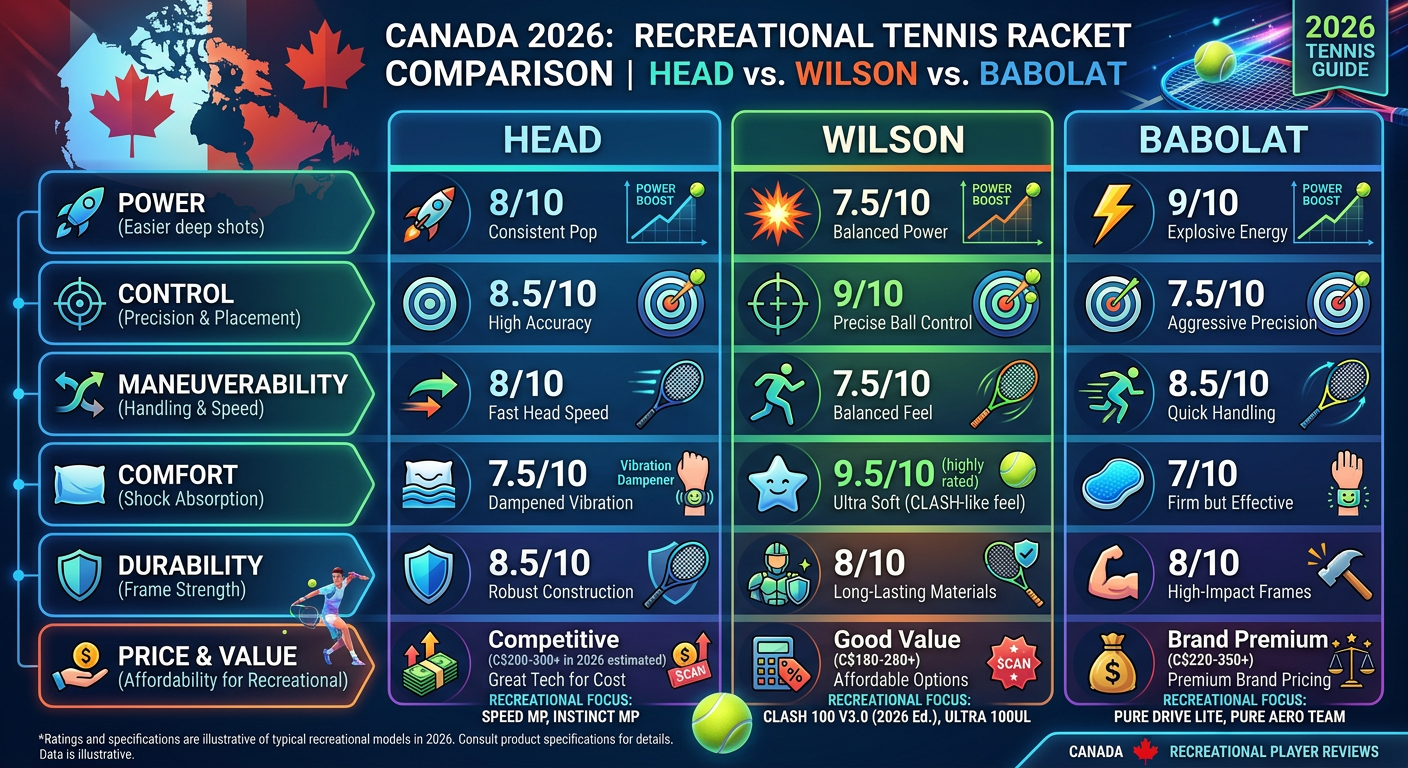
| Category | HEAD | Wilson | Babolat |
|---|---|---|---|
| Design Philosophy | Powerful, tour-tested, precise | Flexible, comfortable, versatile | Power, spin, French engineering |
| Arm Comfort | ★★★★ | ★★★★★ | ★★★ |
| Power | ★★★★★ | ★★★★ | ★★★★★ |
| Control | ★★★★ | ★★★★ | ★★★★ |
| Spin Potential | ★★★★ | ★★★★ | ★★★★★ |
| Beginner Friendliness | ★★★★★ (Ti.S6) | ★★★★ (Federer 105) | ★★★★ (Drive Max 110) |
| Tour Pedigree | ★★★★★ | ★★★★★ | ★★★★★ |
| Price Range (Entry) | $80–$130 CAD | $60–$90 CAD | $80–$120 CAD |
So Which Brand Should You Choose in 2026?
Here’s the honest answer: you cannot go wrong with any of the three. The differences between brands matter more as your game advances — at recreational level, the specific model matters more than the logo on the frame.
Choose HEAD if: You want the best overall tour pedigree, maximum forgiveness at entry level (Ti.S6), or a consistent ecosystem from beginner to advanced frames.
Choose Wilson if: Arm comfort is a priority, you have a history of tennis elbow, or you want the widest variety of playing style options in one brand.
Choose Babolat if: You hit hard and want more power and spin, you’re an aggressive baseliner, or you’re inspired by Alcaraz’s style of play and want what’s in his hand.
Still not sure? Go to your local club pro shop and ask to demo frames from each brand. An hour of hitting with each will tell you more than any article — including this one.
🎾 You’ve Met Your Match
Whether you’re a HEAD loyalist, a Wilson convert, or a Babolat power player — one thing unites all three camps. Check out the “You’ve met your match” hoodie from LooseTennisBalls. Because your brand identity is the racket in your hand. Your personality is everything else.
Related Reading on TennisUncut
- Best Tennis Rackets for Recreational Players in Canada (2026)
- Best Hard Court Tennis Shoes in 2026
- Tennis Elbow Prevention and Treatment
- Tennis String Tension Guide
Frequently Asked Questions
Is HEAD better than Wilson for recreational players?
Neither brand is objectively better — they serve different player needs. HEAD offers more power and tour pedigree; Wilson offers superior arm comfort and more variety across playing styles. For maximum forgiveness at entry level, HEAD’s Ti.S6 edges it. For arm-sensitive players, Wilson Clash is the clear winner. Most recreational players would enjoy either brand — the specific model matters more than the logo.
What racket does Novak Djokovic use in 2026?
Djokovic plays HEAD rackets — specifically a customised version of the HEAD Speed Pro. Consumer versions of the Speed series are available through Amazon.ca and most Canadian tennis retailers. His frame is significantly modified from the retail version in weight and balance, but the Speed Pro retail version captures the same design philosophy.
What racket does Carlos Alcaraz use in 2026?
Alcaraz plays Babolat — he has used the Pure Aero throughout most of his professional career, though he has refined his frame setup as his game has matured. Consumer versions are available in Canada. Note that his professional frame is heavily customised — the retail version will feel noticeably lighter and more accessible.
Which tennis brand is best for tennis elbow sufferers?
Wilson, without question. Their Clash technology — carbon fibre mapping that allows specific frame sections to flex on impact — produces the most arm-friendly high-performance frame currently available. Paired with a multifilament string at lower tension, the Wilson Clash 100 v2 is the recommendation for recreational players with elbow concerns. HEAD’s more flexible frames like the Boom are also reasonable. Babolat’s stiffer frames should generally be avoided by arm-sensitive players.
Is Babolat good for beginners?
Yes — with the right model. The Pure Drive is not a beginner racket; it’s a demanding performance frame. The Drive Max 110, however, is specifically designed for recreational beginners — larger head, lighter weight, more forgiving. If you want Babolat as a beginner, the Drive Max 110 is the honest starting point.
How do I know which tennis racket brand is right for me?
The most reliable method is to demo before buying. Most club pro shops offer demo programs — you pay a small fee to borrow a frame for a session or a week. Hit with a HEAD, Wilson, and Babolat in your target price range and let your arm and your results tell you what works. The brand that feels most natural and produces the best results consistently is your brand.
The Verdict
After 25 years on hard courts playing with and against every brand on this list: HEAD remains my personal choice for overall quality, tour pedigree, and the fact that the Ti.S6 is genuinely the most forgiving recreational racket ever made. I stand by that recommendation with full declaration of bias.
But if arm comfort is your priority — Wilson. If power and spin define your game — Babolat. If you want the most versatile ecosystem across skill levels — HEAD. And if none of this has settled it, go demo three rackets and let your arm make the decision for you. It usually knows best. 🎾