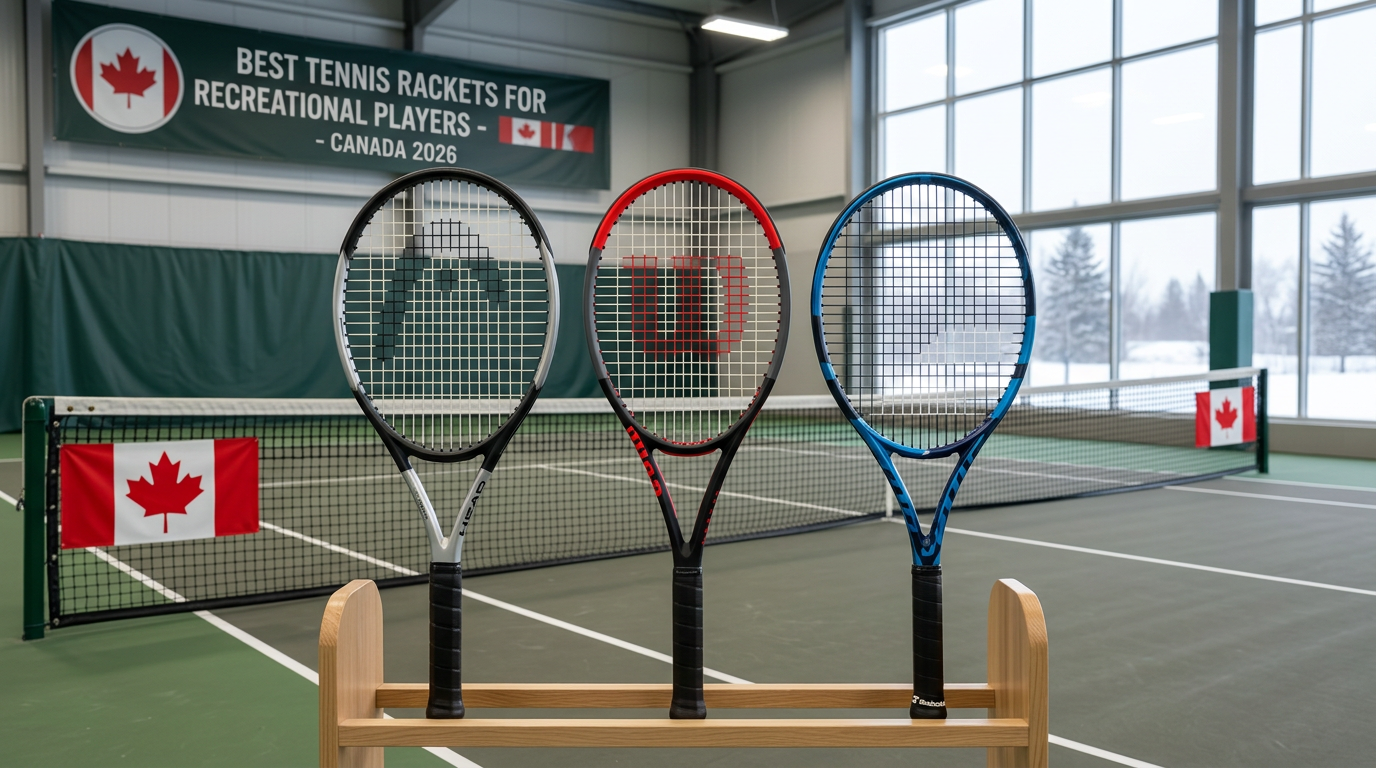
Most “best racket” guides are written for competitive players, sponsored by brands, or built around what professionals use rather than what actually works for someone playing twice a week at their local club. This guide is different. After 25 years of recreational tennis on Canadian hard courts — and more racket experiments than I’d like to admit financially — here is what genuinely works for players like us.
The priorities in this guide: forgiveness, arm comfort, value, and availability in Canada. Not what Djokovic swings. Not what the ATP speed serve record was set with. What helps a recreational player who plays 1–4 times per week actually enjoy tennis and improve.
📊 Canadian Tennis in 2026 — The Numbers
• Tennis Canada reports tennis participation has grown over 40% since 2020
• Most Canadian recreational players identify as beginners to intermediate — the exact players this guide is written for
• USTA research confirms that equipment-related frustration is among the top reasons recreational players plateau or quit — wrong racket choice is a primary factor
• The average recreational player replaces their racket every 3–5 years — making the right choice now worth the research time
Who This Guide is For
This guide is written specifically for players who:
- Play 1–4 times per week recreationally
- Are not training competitively or planning to enter serious tournaments
- Want gear that performs without requiring perfect ball striking on every shot
- Play primarily on hard courts in Canada
- Range from complete beginners to consistent club players
If you’re playing at a competitive club level, entering provincial tournaments, or training with a coach multiple times per week, this guide will still be useful — but you may benefit from our more advanced recommendations within each section.
What to Look for in a Recreational Tennis Racket

The USTA recommends that recreational players prioritise a larger head size and lighter frame over the smaller, heavier frames that advanced players use. Their reasoning is straightforward: you’ll enjoy tennis more — and improve faster — when you’re not fighting your equipment.
Head Size: Measured in square inches. Recreational players should look for 100–115+ sq in. Larger head size = larger sweet spot = more forgiveness on off-centre hits. Professional players often use 95–100 sq in because they hit the sweet spot consistently. You don’t need to hold yourself to that standard.
Weight: Lighter rackets (240–280g) are easier to swing and generate less arm fatigue. Heavier rackets (285g+) offer more stability and power for players with strong, consistent technique. Most recreational beginners benefit from lighter frames — the HEAD Ti.S6 at 236g is the benchmark.
Balance: Head-light balance (weight distributed toward the handle) offers more control and manoeuvrability. Head-heavy balance offers more power on groundstrokes but can contribute to arm fatigue. Most recreational rackets are balanced or slightly head-light.
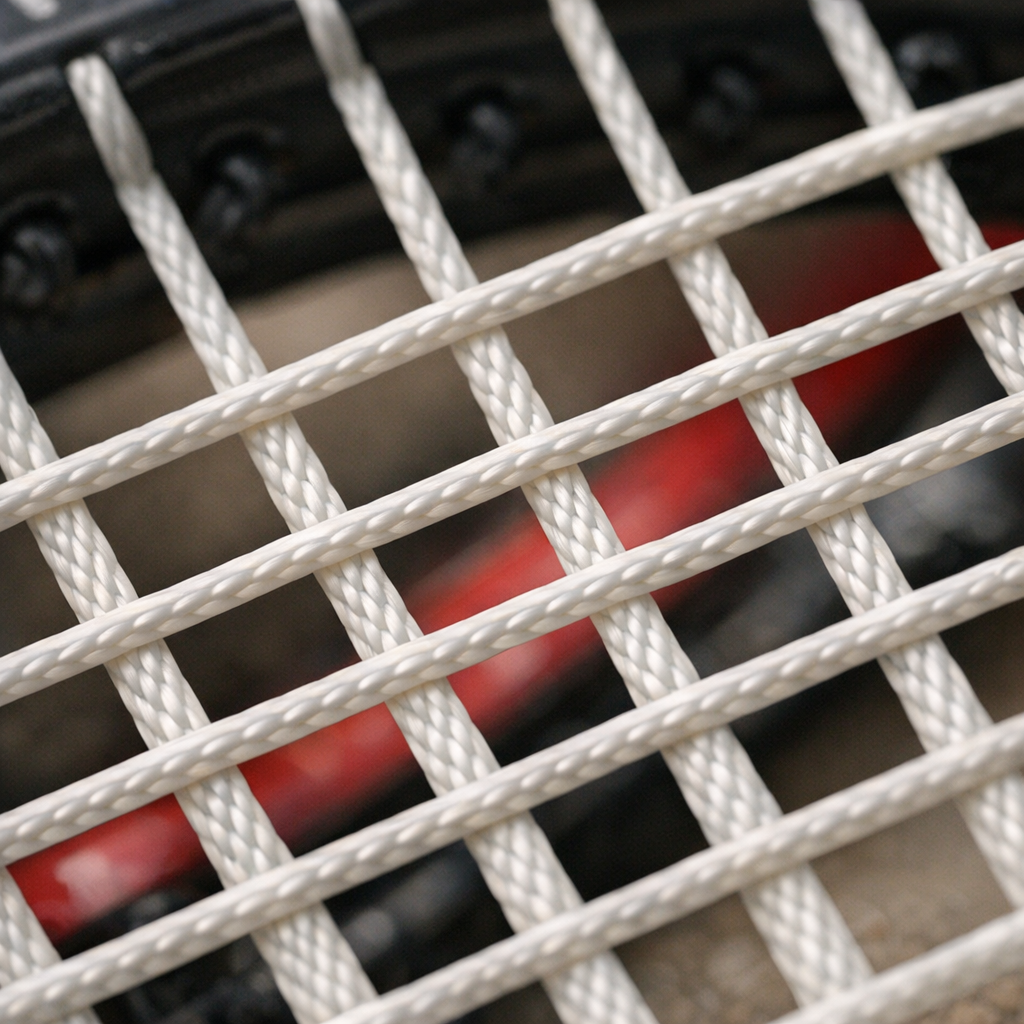
String Pattern: Open string patterns (16×19) generate more spin and have a livelier feel. Dense patterns (18×20) offer more control and durability. Most recreational players benefit from an open pattern — more spin without extra effort.
Grip Size: Critical and often overlooked. Too small = wrist works too hard. Too large = difficult to generate spin. Hold the racket in your dominant hand — you should fit one finger between your fingertips and the palm.
The Best Tennis Rackets for Recreational Players in Canada (2026)
🥇 1. HEAD Ti.S6 — Best Overall Pick
I’ve been recommending the Ti.S6 to every recreational player who asks me for years, and I’ll keep doing it until something better comes along — which hasn’t happened yet. The Ti.S6 has an oversized 115 sq in head size, a titanium graphite frame at a featherlight 236g, and arguably the largest sweet spot in recreational tennis. It is the definition of forgiving.
The physics of the Ti.S6 work specifically in favour of recreational players. The titanium alloy frame allows HEAD to achieve a large head size without the weight penalty that typically accompanies oversized frames — the result is a racket that’s easy to swing, easy to manoeuvre, and punishingly forgiving of the off-centre hits that recreational players produce regularly.
The Ti.S6 is not for players who hit hard with consistent technique and want precision. It’s for players who want to enjoy tennis, rally consistently, and not fight their equipment while they improve. That describes the majority of recreational players in Canada.
Head size: 115 sq in | Weight: 236g | Price (Canada): $80–$130 CAD
✅ Pros: Largest sweet spot in recreational tennis, featherlight at 236g, excellent arm comfort, widely available in Canada, outstanding value
❌ Cons: Not suitable for players who want precision over forgiveness, feel can be too “floaty” for players with strong technique
🥈 2. Wilson Clash 100 v2 — Best for Arm Comfort
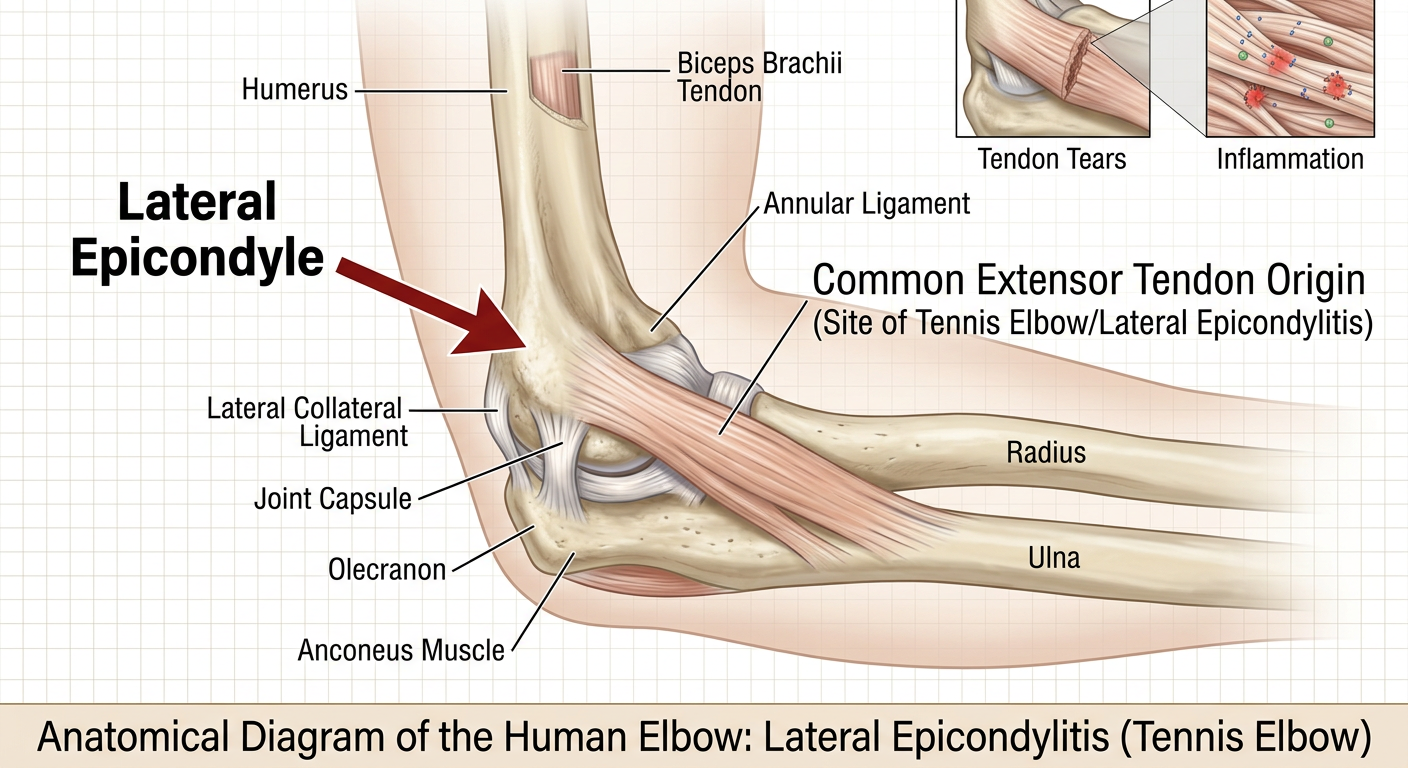
After 25 years of hard court play, I’ve had my encounters with tennis elbow — and the Wilson Clash 100 v2 is the frame I recommend to every recreational player who mentions arm discomfort. Wilson’s carbon mapping technology is the most significant arm-comfort innovation in tennis equipment in the past decade. The frame flexes into the ball on contact rather than transmitting shock rigidly up through the handle.
The Clash 100 v2 is more control-oriented than the Ti.S6 and requires a slightly more consistent swing to get the best from it. But for recreational players with any history of elbow, shoulder, or wrist issues, it’s the most important piece of equipment on this list. The arm comfort difference compared to a stiff Babolat frame is dramatic and measurable.
Head size: 100 sq in | Weight: 295g | Price (Canada): $220–$280 CAD
✅ Pros: Best arm comfort in high-performance frames, excellent feel and feedback, solid for intermediate players, good power and control balance
❌ Cons: Premium price, 100 sq in head size is less forgiving than Ti.S6 for beginners, heavier than the Ti.S6
🥉 3. Babolat Pure Drive — Best for Power-Seeking Players
The Pure Drive is one of the world’s best-selling rackets and has been for two decades — not by accident. It’s the choice of Carlos Alcaraz, the most exciting player on the ATP Tour in 2026, and it delivers exactly what aggressive recreational players want: serious power and spin behind groundstrokes without requiring professional swing speed.
Honest caveat: the Pure Drive is not the most forgiving frame on this list, and it’s not the most arm-friendly. It’s a performance-oriented frame that rewards players who hit with some consistency and want more pace from their equipment. For beginners or arm-sensitive players, look at the Ti.S6 or Clash first.
Head size: 100 sq in | Weight: 300g | Price (Canada): $220–$280 CAD
✅ Pros: Excellent power and spin generation, proven at the highest level, good availability in Canada, solid construction
❌ Cons: Not arm-friendly for sensitive players, less forgiving than Ti.S6, premium price, demanding for true beginners
4. HEAD Boom MP — Best Mid-Range Upgrade
When you’ve outgrown the Ti.S6 — when you’re hitting consistently enough that maximum forgiveness feels like it’s holding you back — the HEAD Boom MP is the natural next step in the HEAD ecosystem. The Auxetic technology creates a more responsive, livelier feel than previous HEAD mid-range offerings.
The Boom MP is particularly well-suited to recreational players developing their game beyond the pure beginner stage — you’re rallying consistently, starting to develop spin, and want a frame that responds to improving technique rather than compensating for it.
Head size: 100 sq in | Weight: 280g | Price (Canada): $180–$240 CAD
✅ Pros: Excellent mid-range performance, Auxetic technology for lively feel, lighter than Clash or Pure Drive, good HEAD brand consistency
❌ Cons: Less forgiving than Ti.S6 for pure beginners, 100 sq in head requires more consistent ball striking
5. Prince Textreme Tour 100P — Best Budget Performance Pick
Prince is criminally underrated and consistently underpriced relative to HEAD, Wilson, and Babolat equivalents. The Textreme Tour 100P delivers genuine performance-oriented construction at a significantly lower price than anything from the big three at comparable spec levels.
Prince invented the oversized racket head in the 1970s — they were engineering for recreational players before any other brand took it seriously. The Textreme Tour offers solid construction, good arm comfort, and decent power and control balance at a price point that makes experimenting affordable.
Head size: 100 sq in | Weight: 296g | Price (Canada): $120–$160 CAD
✅ Pros: Excellent value for money, genuine performance construction, good arm comfort, often available at significant discount
❌ Cons: Less widely available in Canadian retail than big three brands, less resale value
Best Tennis Rackets for Women Recreational Players in 2026
All five rackets above are excellent choices for women recreational players — racket selection is based on playing style and physical requirements, not gender. However, there are a few considerations worth noting for women players specifically:
Grip size: Women’s hands tend to be smaller on average, making grip sizes L1 (4 1/8″) and L2 (4 1/4″) the most common starting points.
Weight preference: Lighter frames (240–270g) are frequently preferred by players who are newer to the sport or building upper body strength. The HEAD Ti.S6 at 236g is an excellent starting point for this reason specifically.
Best picks for women recreational players: HEAD Ti.S6 (maximum forgiveness, featherlight), Wilson Clash 100L (lighter version of the Clash with the same arm comfort technology), Babolat Drive Max 110W (women’s-specific beginner-to-intermediate frame).
Racket Comparison Table — 2026
| Racket | Head Size | Weight | Price (CAD) | Arm Comfort | Best For |
|---|---|---|---|---|---|
| HEAD Ti.S6 ⭐ Top Pick | 115 sq in | 236g | $80–$130 | ★★★★★ | Maximum forgiveness |
| Wilson Clash 100 v2 | 100 sq in | 295g | $220–$280 | ★★★★★ | Arm comfort priority |
| Babolat Pure Drive | 100 sq in | 300g | $220–$280 | ★★★ | Power players |
| HEAD Boom MP | 100 sq in | 280g | $180–$240 | ★★★★ | Intermediate upgrade |
| Prince Textreme Tour | 100 sq in | 296g | $120–$160 | ★★★★ | Budget performance |
Don’t Forget: Strings Matter as Much as the Frame
The racket you choose is only half the equation. A great frame strung incorrectly — wrong string type, wrong tension, or dead strings from lack of restringing — will underperform a mediocre frame strung properly.
String type for recreational players: Multifilament strings (like HEAD Velocity MLT or Wilson NXT) are the most comfortable and arm-friendly choice. Avoid polyester strings unless you’re an advanced club player with consistent technique. See our complete string tension guide for everything you need to know.
Restringing frequency: Most recreational players restring far less often than they should. Dead strings lose tension and transmit significantly more shock to your arm — a leading cause of tennis elbow. Restring every 3–4 months if you play weekly.
🎾 You’ve Got the Racket. Now Get the Attitude.
The right racket is sorted. The right mindset is next. The “You’ve met your match” hoodie from LooseTennisBalls is for players who show up ready — on and off the court.
Complete Your Recreational Tennis Setup
- HEAD vs Wilson vs Babolat — Full Brand Comparison
- Best Hard Court Tennis Shoes in 2026
- Tennis String Tension Guide
- Tennis Elbow Prevention and Treatment
Frequently Asked Questions
What is the best tennis racket for a beginner in Canada?
The HEAD Ti.S6 is the honest answer for most beginners. At 236g with a 115 sq in head size, it’s featherlight, maximally forgiving, and available across Canada at a price that won’t make you wince if you decide tennis isn’t for you after three months. The Wilson Federer 105 is a close second.
How much should I spend on a tennis racket as a recreational player?
For beginners: $80–$130 CAD covers excellent options. For intermediate recreational players who play regularly: $150–$250 CAD accesses genuine performance improvements. Spending above $250 as a recreational player generally delivers marginal gains. The sweet spot is $120–$200 for most recreational players.
Does a more expensive racket make you better at tennis?
Up to a point — yes. The difference between a $50 department store racket and a $120 proper tennis racket is significant. The difference between a $180 and a $280 racket is real but smaller. The difference between $280 and $350 is largely marginal for recreational players. Equipment quality matters — but consistent practice matters more.
What grip size should I use for my tennis racket?
Hold the racket in your playing hand with your normal grip. There should be enough space to fit one finger between your fingertips and the base of your thumb. Most adult men start with L3 (4 3/8″) or L4 (4 1/2″). Most adult women start with L1 (4 1/8″) or L2 (4 1/4″).
How often should I replace my tennis racket?
Most recreational players replace their racket every 3–5 years, which is reasonable if the frame is undamaged. Strings should be replaced far more frequently — every 3–4 months for weekly players. A great frame with dead strings performs worse than a mediocre frame with fresh strings.
Can I buy tennis rackets online in Canada?
Yes — Amazon.ca carries the full range from all major brands with reliable delivery across Canada. The limitation of buying online is that you can’t demo the racket before purchasing. If buying online, the HEAD Ti.S6 and Wilson Clash 100 v2 are the lowest-risk choices — both are very widely loved and rarely returned for playing feel reasons.
The Final Recommendation
Start with the HEAD Ti.S6 if you’re not sure — it’s the most forgiving recreational racket available at any price point. If arm comfort is the priority — invest in the Wilson Clash 100 v2. If you hit hard and want more pace behind your groundstrokes — the Babolat Pure Drive.
Whatever you choose: remember that the racket matters less than consistent practice, proper warm-up, and the right string setup. The best racket is the one in your hand when you’re on the court, playing regularly, and enjoying the sport. 🎾