Tennis dampeners are the most hotly debated $3 accessory in sport. Half of recreational players swear by them. The other half think they’re placebo. The science has been in for years and the honest answer is more nuanced than either camp admits. Here’s the complete guide to tennis dampeners in 2026 — including whether you should use one at all.
What Does a Dampener Actually Do?
A vibration dampener is inserted between the main strings just outside the string bed. It reduces string vibration after impact — specifically the high-frequency “ping” sound that polyester strings produce. Here’s what the research actually shows:
📊 What the Science Says
Research published in the ITF Technical Centre confirms that dampeners reduce string vibration by up to 50% — but this is the high-frequency vibration after the ball leaves the strings, not the impact vibration that reaches your arm. The lower-frequency shock that causes tennis elbow travels through the frame before the dampener has any effect. Dampeners change the sound and feel of a racket. They do not meaningfully prevent tennis elbow.
Why Players Use Them (Beyond the Science)
The sound change is real and significant. Polyester strings without a dampener produce a sharp “ping” on contact. With a dampener, the sound becomes a duller “thud.” Many players find the duller sound less jarring and more confidence-inspiring — and if it makes you play better, that’s a real benefit regardless of the physics. Feel is performance for recreational players.
🥇 1. Tourna Sampras Dampener — Best Overall
Named after Pete Sampras, who used it throughout his career. Simple button design, fits between the two centre main strings, stays put for months without replacing. The benchmark that other dampeners are compared against. Available in multipacks — which you’ll want because they do go missing.
View Tourna Sampras Dampener on Amazon.ca →
🥈 2. Wilson Pro Feel Dampener — Best for Feel
Wilson’s dampener delivers slightly more vibration reduction than the Tourna design. A worm-style dampener that weaves through multiple strings, providing more contact points and more pronounced sound/feel change. Used by Wilson-sponsored professionals including several current top-50 players.
View Wilson Pro Feel Dampener on Amazon.ca →
🥉 3. HEAD Smartsorb Dampener — Best for HEAD Rackets
HEAD’s proprietary dampener design, optimised specifically for their racket frames and string patterns. A natural match for players using our recommended HEAD Radical MP or any other HEAD frame in the lineup.
View HEAD Smartsorb Dampener on Amazon.ca →
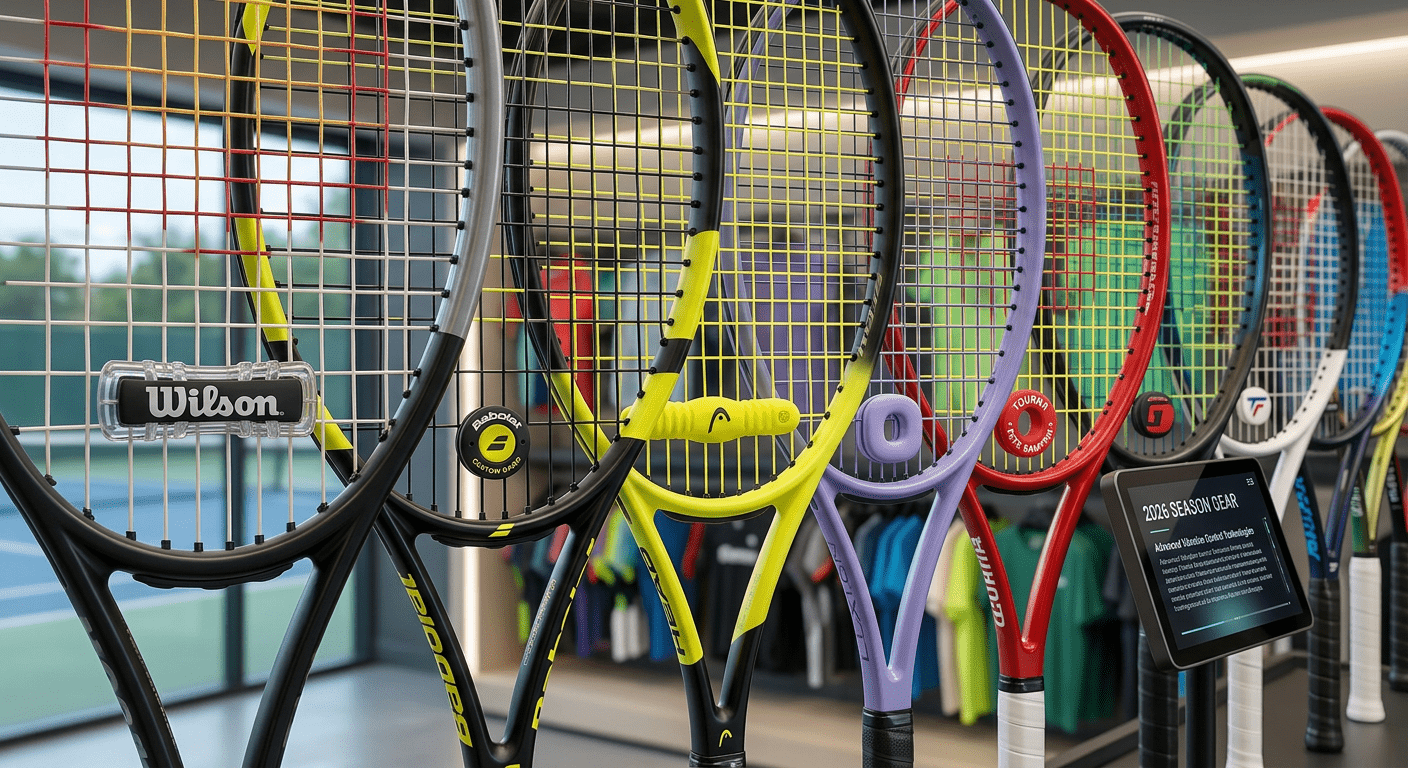
4. Fun / Novelty Dampeners — Because Why Not
Dampeners also come in ball shapes, animal shapes, and custom designs. Performance is identical to standard dampeners — if you’re buying one anyway, buying one shaped like a tennis ball or a miniature donut is a perfectly reasonable choice. They also make excellent stocking stuffers. See our 2026 gift guide for multi-packs that work well as gifts.
View Novelty Dampeners on Amazon.ca →
Should You Use a Dampener?
| Situation | Use a Dampener? | Why |
|---|---|---|
| Playing with polyester strings | Yes ✅ | Reduces the sharp ping significantly |
| You have tennis elbow | Won’t help ❌ | Dampeners don’t reduce arm-damaging shock. Fix string/tension instead. |
| Playing with multifilament strings | Optional | Multifilament already has a softer feel — dampener makes minimal difference |
| You hate the sound of strings pinging | Yes ✅ | Real difference in sound. Completely valid reason. |
| You’ve never tried one | Try it | $3. Worth the experiment. |
The real solution for arm issues is equipment — see our tennis elbow prevention guide, our string tension guide, and consider fresh overgrips which reduce grip pressure and secondary arm stress.
🎾 Sorted Your Setup?
Fresh dampener, fresh overgrip, fresh attitude. The “Just Shut Up and Serve” tee from LooseTennisBalls is the final accessory for the player whose setup is now complete.
Related Reading
- Tennis String Tension Guide
- Tennis Elbow Prevention Guide
- Best Tennis Overgrips 2026
- Best Tennis Strings for Club Players
Frequently Asked Questions
Do tennis dampeners prevent tennis elbow?
No — dampeners do not meaningfully reduce the impact vibration that causes tennis elbow. The ITF Technical Centre confirms that dampeners affect high-frequency post-contact string vibration, not the lower-frequency frame vibration that reaches the arm. Real tennis elbow prevention comes from equipment choices (lighter racket, lower tension, multifilament strings) and technique. See our full tennis elbow guide.
Do tennis dampeners prevent tennis elbow?
About 50% of professional players use dampeners — it’s genuinely split. Rafael Nadal does not use one. Roger Federer used one. Carlos Alcaraz uses one. Novak Djokovic does not. The split at professional level mirrors the split at recreational level — it’s fundamentally a personal preference with no performance advantage either way.
Where does a dampener go on a tennis racket?
Dampeners must be placed outside the string bed — below the bottom cross string, between the two centre main strings. ITF rules prohibit placing dampeners within the string bed itself. Most dampeners clip between two adjacent main strings just below the lowest cross string.
The Bottom Line
Try a Tourna Sampras dampener. It costs $3. If you prefer the feel with it — use it. If you don’t notice a difference or prefer the cleaner feel without it — don’t. There is no wrong answer. The sound change is real; everything else is preference. 🎾