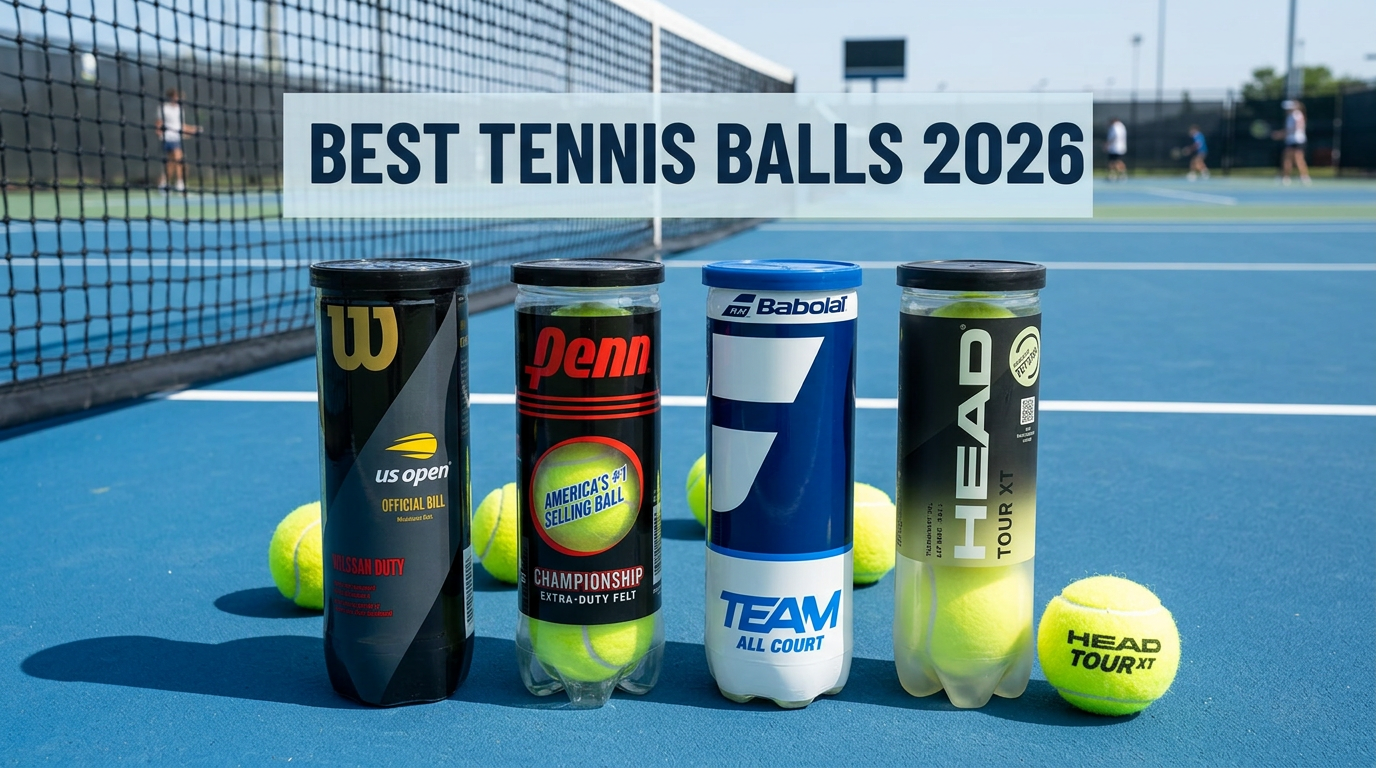
Tennis balls are the most purchased and least researched item in most recreational players’ kits. You buy whatever’s on sale, open the can, and wonder why they’re dead flat after two sessions. Let’s fix that — with 25 years of experience and the latest 2026 product information.
Types of Tennis Balls Explained
| Type | Best For | Lifespan | Price (CAD) |
|---|---|---|---|
| Regular duty felt | Indoor courts, soft courts | 2–4 hrs play | $4–6/can |
| Extra duty felt | Hard courts (most recreational players) | 3–5 hrs play | $5–7/can |
| High altitude | Courts above 4,000 feet elevation | Normal for altitude | $5–7/can |
| Pressureless | Practice only, coaching | Months (no pressure to lose) | $25–40/bucket |
| Premium (Wilson Triniti etc.) | Recreational play, longer sessions | 4× longer than standard | $10–18/can |
Per ITF technical specifications, tennis balls must meet specific standards for size, weight, bounce, and rebound. All major brands meet these standards — the differences are in felt durability, core consistency, and how well they hold pressure over time.
Best Tennis Balls for 2026
🥇 1. Wilson US Open Extra Duty — Best Overall
The actual ball used at the US Open since 1979. The Tex Tech felt is more durable than standard balls, USTA and ITF approved, and available in 4-can packs for value. This is the benchmark for hard court tennis balls.
These are extra duty felt — meaning they’re designed specifically for hard courts, which is where most recreational players in Canada play. The 4-pack is the most economical way to buy.
🥈 2. Penn Championship Extra Duty — Best Budget Pick
The most popular tennis ball in North America. Consistent bounce, reasonable durability, and available everywhere. Buy in bulk for the best value. Not quite as durable as Wilson US Open but the price difference makes up for the shorter lifespan.
Penn balls are the default choice for most public courts and recreational programs in Canada. If you’re learning, this is your starter ball.
🥉 3. Wilson Triniti — Best for Eco-Conscious Players
Wilson Triniti uses a unique polymer core instead of a pressurized rubber core — the result is a ball that lasts 4× longer than standard balls and comes in a recyclable tube instead of a metal can. More expensive upfront but dramatically better value over a full season.
The eco angle is real — Wilson estimates Triniti reduces tennis ball waste significantly compared to standard pressurized balls. For environmentally conscious players, this is the clear choice.
4. HEAD Tour XT — Best Premium Hard Court Ball
HEAD’s tour ball offers excellent consistency and durability for hard court play. Slightly higher quality felt than the Penn Championship, but also slightly more expensive. Worth the upgrade if you play multiple times per week and want consistent ball performance throughout your sessions.
5. Dunlop Fort All Court — The Underrated Choice
Dunlop Fort is the official ball of multiple ATP tournaments and the Australian Open. Excellent consistency, good felt durability, and increasingly available in Canadian retail. A genuine alternative to the Wilson/Penn dominance for players who want something different.
Pro Tip: Extend Ball Life with a Pressurizer
A tennis ball pressurizer stores your open can at original pressure, significantly extending ball life. For players going through 2+ cans per week, this pays for itself within a month. The Tuniq Tube and similar products keep your balls fresh between sessions.
🎾 Tennis Ball Pressurizer
A pressurizer keeps your opened cans at original pressure, dramatically extending ball life. Costs $30–$50 CAD and pays for itself within a month for regular players.
How to Tell When Tennis Balls Are Dead
- Bounce test: Drop ball from shoulder height onto a hard surface. Should bounce to at least waist height. If lower, ball is losing pressure.
- Squeeze test: Healthy ball should feel firm and bounce back immediately. Dead ball compresses easily and feels soft.
- Felt condition: Visible bald patches or fluffy/matted felt indicates the ball is at end of useful life.
- Sound test: Healthy balls produce a sharp, distinct “thwack” off the strings. Dead balls produce a duller, lower-pitched sound.
Tennis Balls for Different Court Surfaces
Most Canadian recreational tennis is played on hard courts, but if you’re playing on different surfaces, ball choice matters:
- Hard courts: Extra duty felt — Wilson US Open, Penn Championship Extra Duty
- Indoor courts: Regular duty felt — felt lasts longer on smoother surfaces
- Clay courts: Regular duty felt — extra duty felt picks up too much clay
- Grass courts: Regular duty felt — extra duty wears too quickly on grass
🎾 Our Top Pick
The Wilson US Open Extra Duty is the benchmark. It’s the ball the pros play on, widely available in Canada, and consistently good. Buy in bulk and save. For budget-conscious players, Penn Championship is the right choice. For environmentally conscious players, Wilson Triniti is worth the upgrade.
🎾 Stop Overthinking the Balls
Yes, ball choice matters. No, you don’t need to spend an hour researching. The “Just shut up and serve” T-shirt from LooseTennisBalls is for players who finally stopped overthinking and started playing.
Related Reading
- Best Tennis Rackets for Recreational Players (2026)
- HEAD vs Wilson vs Babolat Brand Guide
- Best Tennis Bags for 2026
- Best Hard Court Tennis Shoes (2026)
Frequently Asked Questions
How long do tennis balls actually last?
Standard pressurized tennis balls last 2–4 hours of play before significant pressure loss. Premium balls like Wilson Triniti last 4× longer due to their polymer core. Once opened, even unused balls in a can lose pressure within 2–4 weeks. Practice/coaching pressureless balls last for months but feel different to play with.
What’s the difference between regular and extra duty tennis balls?
Extra duty balls have thicker felt designed to withstand abrasion from hard courts. Regular duty balls have thinner felt suited to softer surfaces (clay, indoor courts, grass). Using regular duty on hard courts wears the felt out within 1–2 hours. Always match ball type to court surface.
Are expensive tennis balls worth it?
For dedicated regular players — yes. Premium balls last longer, perform more consistently throughout their lifespan, and provide better feel. For occasional players — Penn Championship at the lower price point is perfectly adequate. The premium ball decision depends on play frequency, not skill level.
Can I revive dead tennis balls?
Partially yes — a tennis ball pressurizer can restore pressure to balls that have lost some pressure but aren’t completely dead. Once felt is heavily worn or balls are very flat, no amount of pressurization will restore them to playable condition. Pressurizers work as preservation, not full revival.
Why are some tennis balls more expensive than others?
Felt quality is the primary cost driver. Premium felts (used in Wilson US Open, HEAD Tour) are more durable and provide better feel than standard felts (used in basic Penn). Core construction also matters — Wilson Triniti’s polymer core is significantly more expensive to manufacture than standard pressurized rubber cores but lasts much longer.
What tennis balls do the pros use?
Different tournaments use different balls based on sponsorship deals. The Wilson US Open ball is used at the US Open and many ATP tournaments. The Dunlop Fort is used at the Australian Open. The Slazenger Wimbledon ball is used only at Wimbledon. Roland Garros uses the Wilson Roland Garros ball. Pros adapt to whatever ball is provided at each tournament.
The Bottom Line
Complete your setup with the right racket and check our brand comparison guide if you’re not sure which ball brand aligns with your kit. Tennis balls are an ongoing expense — buying right saves money over time. 🎾