This article is general information, not medical advice. If you have knee pain that is sharp, persistent, swollen or follows an injury, see a doctor or physiotherapist before you keep playing.
Tennis is hard on knees. Constant lunging, stopping and pivoting loads the joint, and the years add up. Many recreational players use some kind of knee support to feel more confident on court.
Here’s how the main types differ, so you can have a better conversation with a professional about what might suit you.
Types of Knee Support
Compression Sleeves
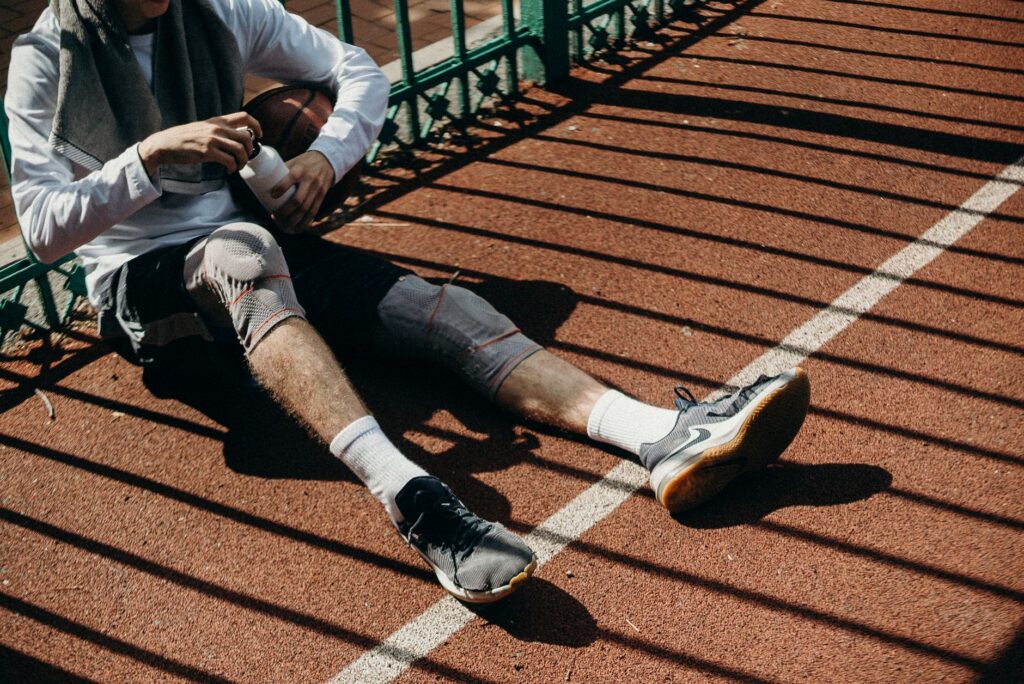
Elastic sleeves that fit snugly around the knee. They provide mild compression and warmth, and many players find they feel more stable. They’re the lightest option and the easiest to wear for a whole match.
Compare knee compression sleeves on Amazon
Patellar Straps
A narrow strap that sits just below the kneecap. People use them for pain around the patellar tendon, sometimes called “jumper’s knee”. They concentrate pressure on one spot rather than covering the whole joint.
Browse patellar tendon straps on Amazon
Open-Patella Stabilising Braces
These add side support with a hole or cutout for the kneecap. They offer more structure than a sleeve while still allowing movement.
See open-patella knee braces on Amazon
Hinged Braces
Hinged braces give the most support and are usually recommended for specific injuries or instability, normally on a clinician’s advice. They can feel bulky for tennis and aren’t something to self-prescribe.
How to Choose
- Know why you want one. General confidence and warmth points to a sleeve. A specific pain point should be checked by a professional first.
- Get the size right. Measure as the manufacturer instructs, because a brace that is too tight or too loose is no use.
- Check you can move freely. Test lunges and quick direction changes before you wear it in a match.
A Brace Is Not a Fix
A knee support can make things feel better, but it doesn’t address why your knee hurts. Strength, mobility, footwear and court surface all matter. Strengthening your quads, glutes and hips is often part of a physiotherapist’s advice, and our tennis fitness guide for recreational players is a useful starting point for building a base.
Warm Up, and Check Your Surface
- Never skip your warm-up. Try our tennis warm-up routine.
- Softer surfaces such as clay are usually kinder to joints than hard courts.
- Make sure your shoes aren’t worn out. Collapsed cushioning shifts load onto your knees.
Final Thoughts
A sleeve is a reasonable low-cost option for general support. For anything more serious, get it assessed first and let a professional decide whether a brace is appropriate. Staying on court long-term matters more than any single match.
Photos via Pixabay: moerschy, Felix1999, karsten_madsen.